In the context of continuously fluctuating crude oil prices, many plastic manufacturing businesses in Vietnam face a challenging equation: how to control raw material costs without compromising product quality? Most small and medium-sized plastic enterprises still approach cost issues in a "passive cutting" manner-only intervening when costs exceed thresholds-instead of building a proactive and sustainable optimization system. The result is short-term savings but long-term damage due to unstable quality and increased scrap rates. This article synthesizes 5 golden principles that leading plastic manufacturers are applying to systematically and sustainably optimize raw material costs.
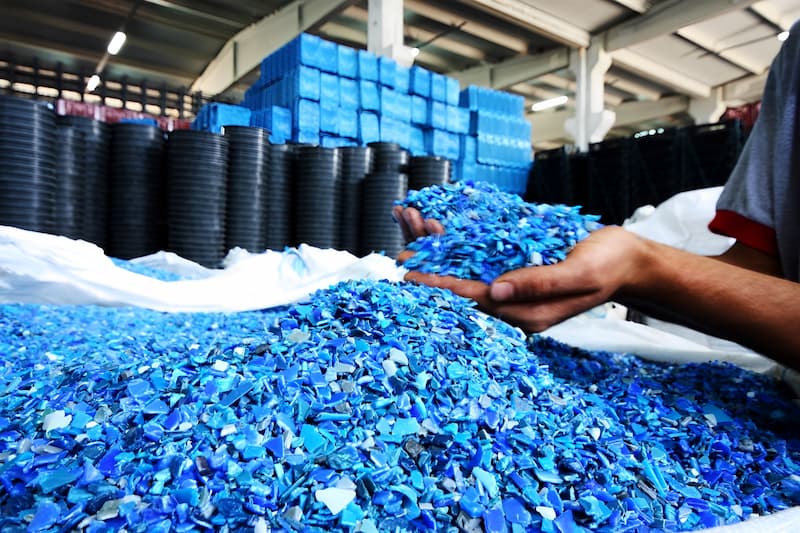
5 golden principles that leading plastic manufacturers are applying to systematically and sustainably optimize raw material costs.
1. Overview of raw material costs in plastic production
1.1. What percentage of product cost do raw materials account for?
Plastic production has a unique cost structure that every manager must understand: raw materials typically account for 60-70% of total product cost, significantly higher than the 40-50% average in other processing industries. This means that reducing 5% of raw material costs can generate an additional 1.5-1.75 billion VND in profit for a factory with 50 billion VND annual revenue without raising prices or cutting staff. This is why raw material optimization remains the top strategic lever in the industry.
1.2. Why are plastic raw material costs in Vietnam exposed to high risks?
The foundational risk for Vietnam's plastics industry is heavy import dependence. According to B-Company Japan, Vietnam's plastic raw material localization rate is only 15-20%, meaning 80-85% of PE, PP, PVC, and PET resins must be imported. In 2024, plastic raw material import value reached 11.8 billion USD, up 20.7% from 2023. Consequently, any USD/VND exchange rate fluctuations or Brent crude oil price changes directly and immediately impact production costs. According to Nhựa Tân Phú HN, despite the industry achieving 31 billion USD in revenue in 2024, raw material and semi-finished product import costs alone consumed 13 billion USD-nearly 42% of total industry revenue.
Beyond macroeconomic factors, many businesses suffer additional internal losses: scrap rates in non-optimized injection molding lines can reach 3-8% of total input materials, while industry standards for advanced factories are below 1-2%. Add the habit of emergency purchases at spot prices 10-15% higher than contract prices during shortages, and cumulative annual losses become substantial.
2. Principle 1 - Smart raw material selection and blending
2.1. Choose the right plastic type for the right product
The first step in raw material cost optimization is avoiding "over-specification." A common mistake is specifying ABS resin (priced at 1,400-1,800 USD/ton) for simple machine housings that don't require high surface durability, when PP reinforced with 20% talc can meet 80-90% of technical requirements at 35-40% lower cost. Reviewing the Bill of Materials (BOM) from a cost perspective-not just technical-often yields significant savings without additional investment.
2.2. Blend virgin and recycled plastics at optimal ratios
Recycled plastics (rPP, rPE, rHDPE) typically cost 20-40% less than virgin resins. Many factories have successfully blended up to 30% rHDPE into PE film formulations for non-direct food contact packaging without compromising mechanical properties below ASTM D638 standards. With a 300 USD/ton price differential and 500 tons/year consumption, this single adjustment can save 45,000 USD/year.
.jpg "Smart raw material selection and blending")
Smart raw material selection and blending
3. Principle 2 - Effective use of fillers and additives
3.1. CaCO₃ filler masterbatch - The most direct and popular cost-saving solution
Filler masterbatch is a mixture of inorganic fillers (typically CaCO₃-calcium carbonate) dispersed in PP or PE carrier resin, with filler content ranging from 60-80% by weight. According to Syntex America (2026), replacing 20-40% virgin resin with CaCO₃ masterbatch achieves 12-22% raw material cost savings per kg of finished product without affecting tensile strength, elongation, or melt flow index. US Masterbatch reports that filler masterbatch use can reduce overall production costs by up to 30% in high-volume applications.
Beyond fillers, functional additives also deliver significant savings. Adding just 0.3-0.5% lubricant masterbatch improves material flow in injection machines, reducing average injection pressure by 15-20% and saving 8-12% energy in the injection stage-a continuous cost reduction every production shift.
3.2. Additive blending ratios by application
| Application |
Additive type |
Optimal ratio |
Estimated savings |
| PE film, HDPE bags |
CaCO₃ filler masterbatch |
20–30% |
12–22% raw material cost |
| PP woven sacks |
CaCO₃ filler masterbatch |
15–25% |
10–18% raw material cost |
| PVC pipes |
Talc + CaCO₃ |
10–20% |
8–12% raw material cost |
| PP injection products |
CaCO₃ + lubricant |
15–30% |
10–20% raw material cost |
4. Principle 3 - Process optimization to reduce material waste
4.1. Control material consumption norms per process stage
Material waste in plastic production accumulates gradually across hundreds of daily batches rather than through major incidents. An effective, simple method is the "input weight - output weight" measurement across each process stage for at least 10 consecutive batches. When losses exceed 1.5% of total input materials/shift, it's a clear signal for investigation.
Real-world example: A Bình Dương injection molding factory discovered actual losses at 4.2%-nearly double the industry average. The cause was operators' habit of running 5-7 "test shots" at shift start without verifying mold temperature, discarding the initial defective products. Adding mandatory mold temperature checks before formal production reduced scrap to 1.8%-saving hundreds of millions VND in materials annually without any investment.
4.2. Reuse production scrap directly in the line
Production scrap (runners, sprues, edge trim) is not waste-it's thermally processed material with reuse value if handled correctly. Clean, same-type plastic scrap generated in the same shift can be reground and reintroduced to the line at ratios not exceeding 15-20% batch weight without significantly degrading mechanical properties. The key point many businesses overlook: sort scrap at source by color and resin type. Mixing multi-color scrap limits it to black products only (after carbon black masterbatch), significantly reducing reuse scope and recovery value.
5. Principle 4 - Optimal inventory and supply chain management
5.1. FIFO principle and "3 No's" for plastic raw material storage
The FIFO (First In-First Out) principle seems simple, but many plastic raw material warehouses inadvertently operate in reverse due to storage convenience. The result: bags imported 3-6 months earlier sit at the back, gradually absorbing moisture or expiring. Beyond FIFO, three rigid rules apply: no direct floor/wall contact (elevate pallets 10 cm minimum to prevent moisture absorption); no leaving opened bags unsealed beyond 24 hours; and no mixing lots without MFI testing-even identical SKUs from different production runs can vary 10-15% in MFI, causing noticeable surface quality differences.
5.2. Cost-saving raw material purchasing strategies
Consolidating quarterly demand instead of monthly orders enables 3-7% lower spot market pricing negotiations, providing suppliers with stable revenue assurance. For predictable, stable consumption materials, long-term contracts with partial fixed pricing for 3-6 months hedge against seasonal spikes or geopolitical events-a real risk given Vietnam's 70%+ import dependency, per Vietnam Plus.
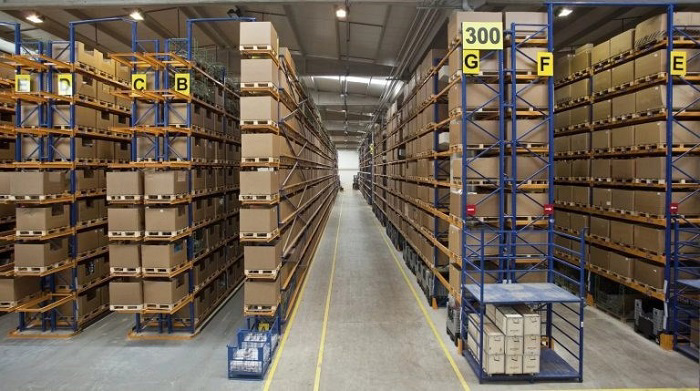
Optimal inventory and supply chain management
6. Principle 5 - Applying technology and data to purchasing decisions
6.1. ERP/MRP - From intuition to data-driven planning
MRP (Material Requirements Planning) systems integrated in ERP automatically calculate required materials from confirmed production schedules, cross-reference current inventory, and suggest optimal purchase orders in quantity and timing-ensuring continuous production without excess stock. According to SMC Data, ERP predictive analytics can forecast raw material price fluctuations, cutting purchasing costs by up to 10%. Similarly, ERP-supported smart recycling strategies boost material recovery rates by up to 15%.
6.2. Market price tracking and supplier switch analysis
A rarely trained skill in Vietnamese plastic businesses is reading global raw material price trends. Reliable sources include ICIS Pricing (weekly PP, PE, PET, ABS prices in Asia), Platts Petrochemical Marker (naphtha and monomer prices), and thitruonghatnhua.com (Vietnamese market bulletins). Monitoring these enables procurement to anticipate price cycles and adjust timing/volume proactively.
For supplier switching: only consider when price savings exceed 5% current pricing and after full switchover cost accounting-including 2-6 weeks of trials, temporary scrap rate increases, and machine parameter adjustments if new material MFI differs significantly.
7. Comparison of 5 principles' effectiveness by business scale
| Principle |
Estimated savings |
Complexity |
Best suited for |
| 1. Material selection & blending |
10–40% raw material cost |
Medium |
Businesses with materials engineers |
| 2. Fillers & additives use |
10–30% raw material cost |
Low–Medium |
All scales |
| 3. Process optimization & waste reduction |
3–8% total input materials |
Medium |
Businesses with stable technical teams |
| 4. Inventory & supply chain management |
10–20% inventory cost |
Medium |
Medium & large businesses |
| 5. ERP & data applications |
10–15% purchasing cost |
High |
Growing businesses |
8. Frequently asked questions (FAQ)
Does filler masterbatch reduce product quality?
When used at correct ratios for appropriate products, CaCO₃ filler masterbatch doesn't significantly degrade mechanical properties. Safe recommended ratios are typically 20-40% by application. Exceeding limits without technical validation can make products brittle and crack-prone.
Can recycled plastic fully replace virgin resin?
Not recommended for most industrial applications. 20-30% ratios balance cost savings with quality stability, particularly for non-direct food contact packaging.
Does ERP software really save raw material costs?
Yes. ERP/MRP enables accurate demand forecasting, prevents emergency high-price buys, and optimizes inventory levels. Per SMC Data analysis, ERP supports up to 10% raw material purchasing cost reduction and 15% higher material recovery rates.
How to reduce scrap rates in plastic injection molding?
Establish standardized injection parameter sheets per mold, with mandatory mold temperature checks before shift start. Follow with DOE (Design of Experiment) methodology to identify optimal parameter windows, replacing operator intuition.
9. EuroPlas - Partner for plastic raw material cost optimization
EuroPlas is Vietnam's leading filler masterbatch and functional plastic resin manufacturer, with over 15 years of experience serving customers in 95+ countries. The company provides comprehensive raw material solutions helping plastic manufacturers systematically optimize input costs, including:
- CaCO₃ Filler Masterbatch:
- Color Masterbatch
- Engineering Plastic Compound
- Additive Masterbatch
- Bioplastic Compounds
- Biofiller
If you are interested in or have any questions about our products, please feel free to contact us.