Bioplastics are attracting growing attention as the plastics industry looks for ways to reduce dependence on fossil-based raw materials, increase the use of renewable resources, and develop more suitable end-of-life solutions for selected applications. However, growing interest does not mean bioplastics already represent a large share of the global plastics market.
In 2025, global bioplastic production capacity reached approximately 2.31 million tonnes, while actual production stood at around 1.67 million tonnes. The industry operated at an average capacity utilization rate of approximately 72%. Despite this progress, bioplastics still represented only around 0.5% of global plastics production.
These figures show a clear contrast: bioplastics remain a small segment, but both production capacity and application scope are expanding. Packaging continues to dominate demand, while automotive, transport, agriculture, and other sectors are gradually increasing adoption. The following seven figures provide a clearer view of the global bioplastics market in 2025 and its development outlook toward 2030.
1. What are bioplastics and how should market data be interpreted?
Bioplastics are plastics that are bio-based, biodegradable, or both. This means bioplastics are not automatically biodegradable, and different material types serve different functions.
In practice, bioplastics fall into three main groups: bio-based but non-biodegradable plastics (such as bio-PE and bio-PP), bio-based and biodegradable plastics (such as PLA and PHA), and biodegradable plastics that may still contain fossil-based content (such as PBAT). Because of this diversity, two materials labeled as bioplastics can have completely different performance and end-use purposes.
For example, bio-PE and bio-PP are typically used to reduce fossil-based content in durable products, while PLA or PHA are more often selected for applications requiring biodegradability or compostability, such as packaging or disposable items.
Therefore, material selection should not rely only on the “bioplastic” label. A proper evaluation must consider renewable content, biodegradation conditions, certifications, processing technology, mechanical performance, product lifetime, and end-of-life treatment.
Another key concept is the difference between production capacity and actual production. Production capacity refers to the maximum output a facility can produce, while actual production reflects real output under market conditions. For example, a plant with 100,000 tonnes capacity operating at 70% utilization produces about 70,000 tonnes.
To evaluate the market correctly, three indicators must be considered together: production capacity (potential output), actual production (real output), and capacity utilization (efficiency of use). Relying only on announced capacity can overestimate market size.
Read more: What Are Bioplastics? A Complete Overview of Bioplastic Materials Today
2. Figure #1: 2.31 million tonnes – global bioplastic production capacity in 2025
Global bioplastic production capacity reached approximately 2.31 million tonnes in 2025, representing the total industrial capability available rather than actual output. This capacity reflects a growing industrial base that supports more suppliers, wider material availability, improved supply security, and greater application diversity. However, demand has not yet fully matched installed capacity, meaning expansion is still ahead of full market absorption.
Growth is driven by multiple material families rather than a single dominant polymer. PLA is widely used in packaging, disposable products, and fibers; PHA is gaining attention due to its biodegradability; while bio-PE and bio-PP are used to replace fossil-based equivalents while maintaining similar performance. Because each material behaves differently, there is no universal “best bioplastic.” Selection depends on application requirements. For example, blown film applications prioritize flexibility, elongation, and sealing performance, while injection molding focuses more on stiffness, impact resistance, and thermal stability.
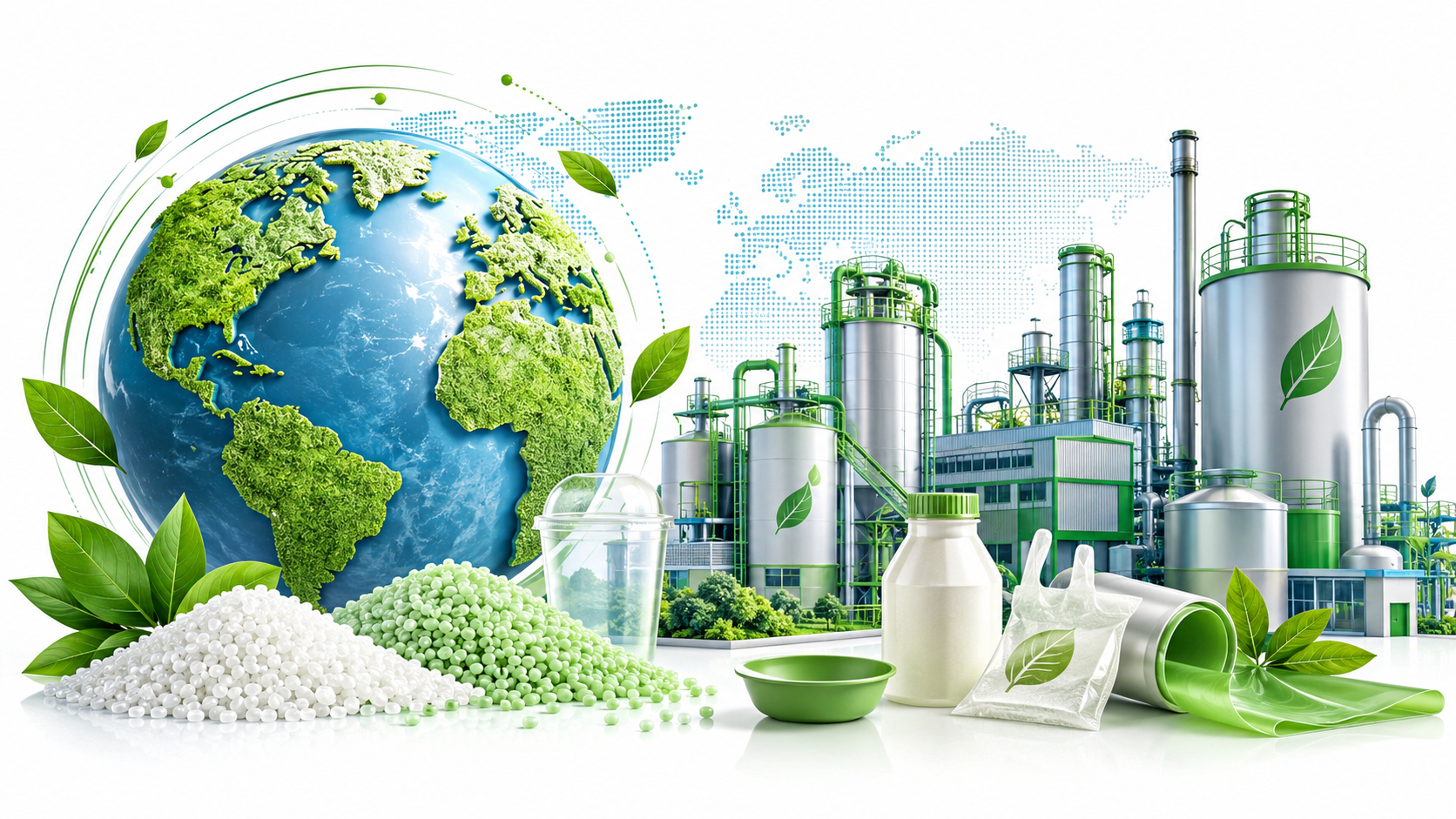
Global bioplastic production capacity reached approximately 2.31 million tonnes in 2025
3. Figure #2: approximately 0.5% – bioplastics remain a very small share of global plastics
Despite reaching 2.31 million tonnes in capacity, bioplastics accounted for only around 0.5% of global plastics production in 2025. This confirms that bioplastics are still a niche segment compared with conventional plastics such as PE, PP, PET, and PVC, which dominate due to large-scale production, mature supply chains, and established processing infrastructure.
However, the small share also indicates significant growth potential. Even modest substitution in selected applications could create substantial demand expansion. Growth is expected to be uneven, with faster adoption in areas where bioplastics offer clear advantages, such as short-life packaging, organic waste bags, agricultural films, and applications requiring higher renewable content or controlled biodegradability.
Therefore, bioplastics should not be viewed as a universal replacement. Material suitability depends on technical performance, cost, supply stability, processing compatibility, and end-of-life requirements.
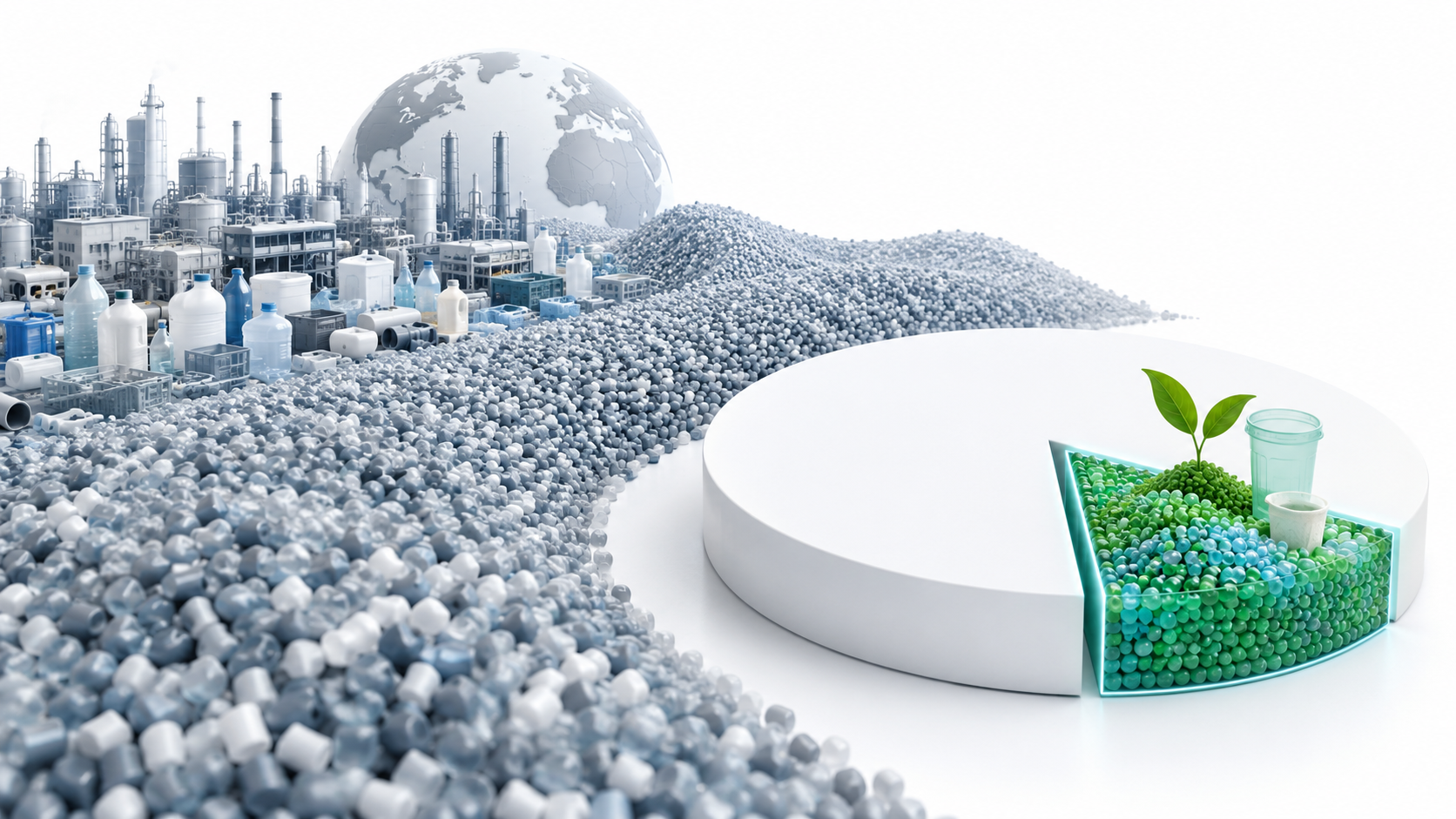
Despite reaching 2.31 million tonnes in capacity, bioplastics accounted for only around 0.5% of global plastics production in 2025.
4. Figure #3: 1.67 million tonnes – actual bioplastic production in 2025
Actual bioplastic production reached approximately 1.67 million tonnes in 2025, compared with 2.31 million tonnes of installed capacity, leaving a gap of about 0.64 million tonnes.
This gap does not necessarily indicate oversupply. In industrial production, full utilization is rare due to maintenance, product changeovers, raw material availability, and ramp-up time for new facilities. Actual production is therefore a more reliable indicator of real market activity than capacity alone. It reflects how much installed infrastructure is actually converted into commercial output.
For buyers and manufacturers, actual production also signals supply maturity. Key factors to evaluate include the number of active suppliers, regional availability, lead times, batch consistency, and grade availability for specific applications.
5. Figure #4: 72% – global bioplastic capacity utilization rate
The global bioplastics industry operated at an average capacity utilization rate of approximately 72% in 2025, meaning that 72 tonnes were produced for every 100 tonnes of installed capacity.
This indicates that a significant portion of production capacity is already in active use, reflecting real commercial demand rather than purely planned expansion. However, utilization varies widely across materials, ranging from about 28% to 100%, depending on maturity, application base, and supply chain development. Established materials tend to operate at higher utilization, while newer materials often have underused capacity.
For a realistic market assessment, three indicators must be analyzed together: production capacity, actual production, and capacity utilization. When all three increase over time, it signals genuine market growth. If capacity grows faster than utilization, it may indicate oversupply relative to demand.
This balance will be especially important toward 2030, when forecast capacity expansion will only translate into real market growth if demand and production increase at a similar pace.
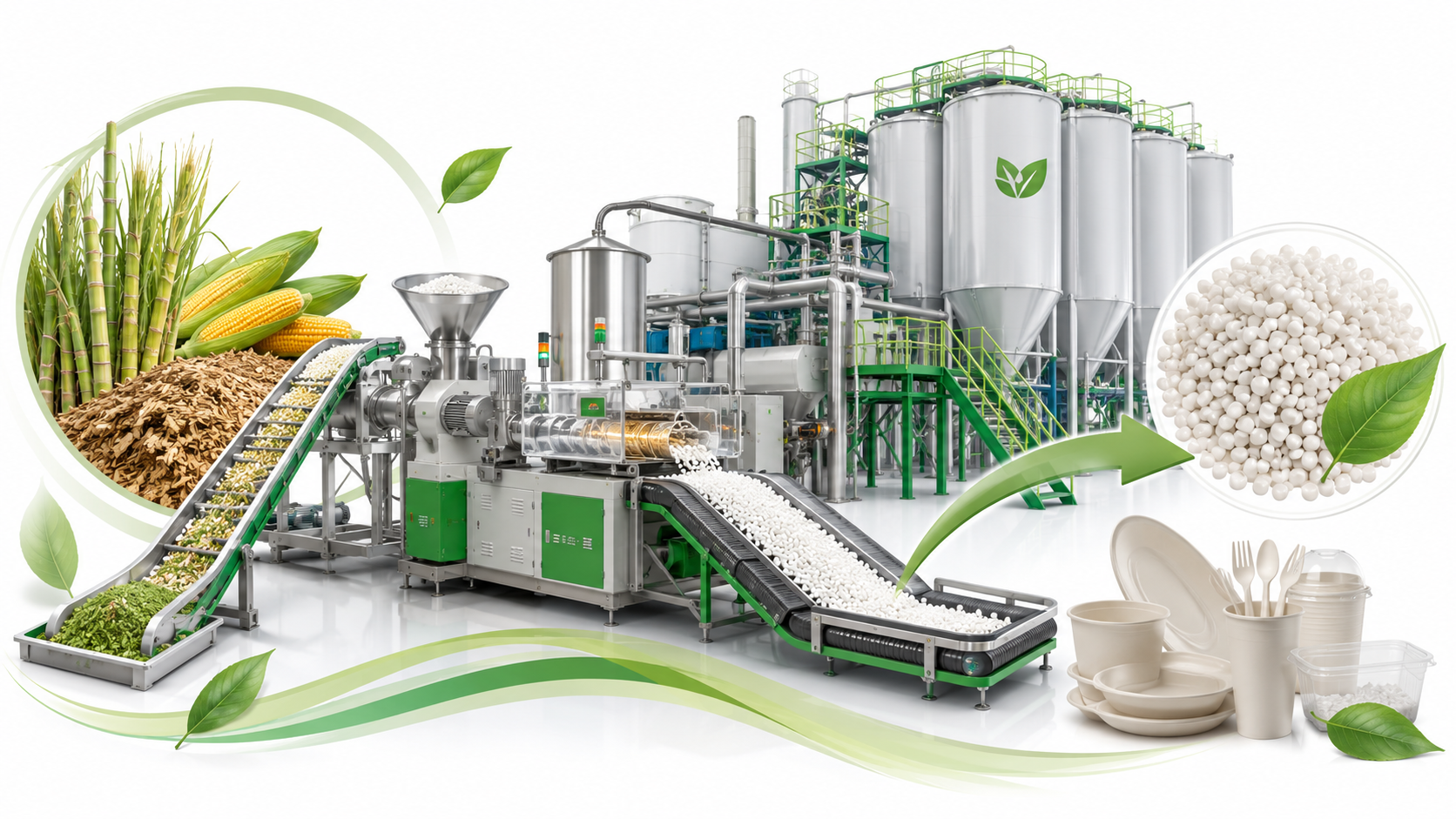
The global bioplastics industry operated at an average capacity utilization rate of approximately 72% in 2025
6. Figure #5: 41.3% – packaging is the largest bioplastics application
Packaging remained the largest application segment for bioplastics in 2025, accounting for approximately 41.3% of global production capacity, or about 0.95 million tonnes.
This dominance is closely linked to the nature of packaging itself. Many packaging products have short service lives, ranging from a few minutes to several days, which increases pressure to reduce fossil-based material use and improve end-of-life management.
Bioplastics are already used in applications such as:
- flexible films;
- shopping bags;
- organic waste collection bags;
- food trays and containers;
- cups and disposable products;
- selected rigid packaging.
Within the packaging segment, flexible packaging accounts for approximately 26.6% of global bioplastics capacity, while rigid packaging represents around 14.7%.
Flexible packaging is particularly important because many biodegradable materials are well suited to applications such as bags and films. However, material formulation remains critical. Neat PLA, for example, is relatively rigid and may need to be blended with PBAT or other components to improve flexibility, elongation, and film-processing performance.
Packaging also illustrates why bioplastics should not be considered a direct one-to-one replacement for conventional plastics. A food package that requires high heat resistance, strong moisture protection, or a long shelf life may still require properties that some bioplastics cannot provide on their own.
For this reason, material selection should be based on the full product requirement, including:
- barrier performance;
- mechanical strength;
- transparency;
- sealing performance;
- service life;
- processing method;
- end-of-life treatment.
Packaging is likely to remain one of the main drivers of bioplastics demand, but growth will depend on choosing the right material for the right application rather than simply replacing PE, PP, or PET with a bioplastic alternative.
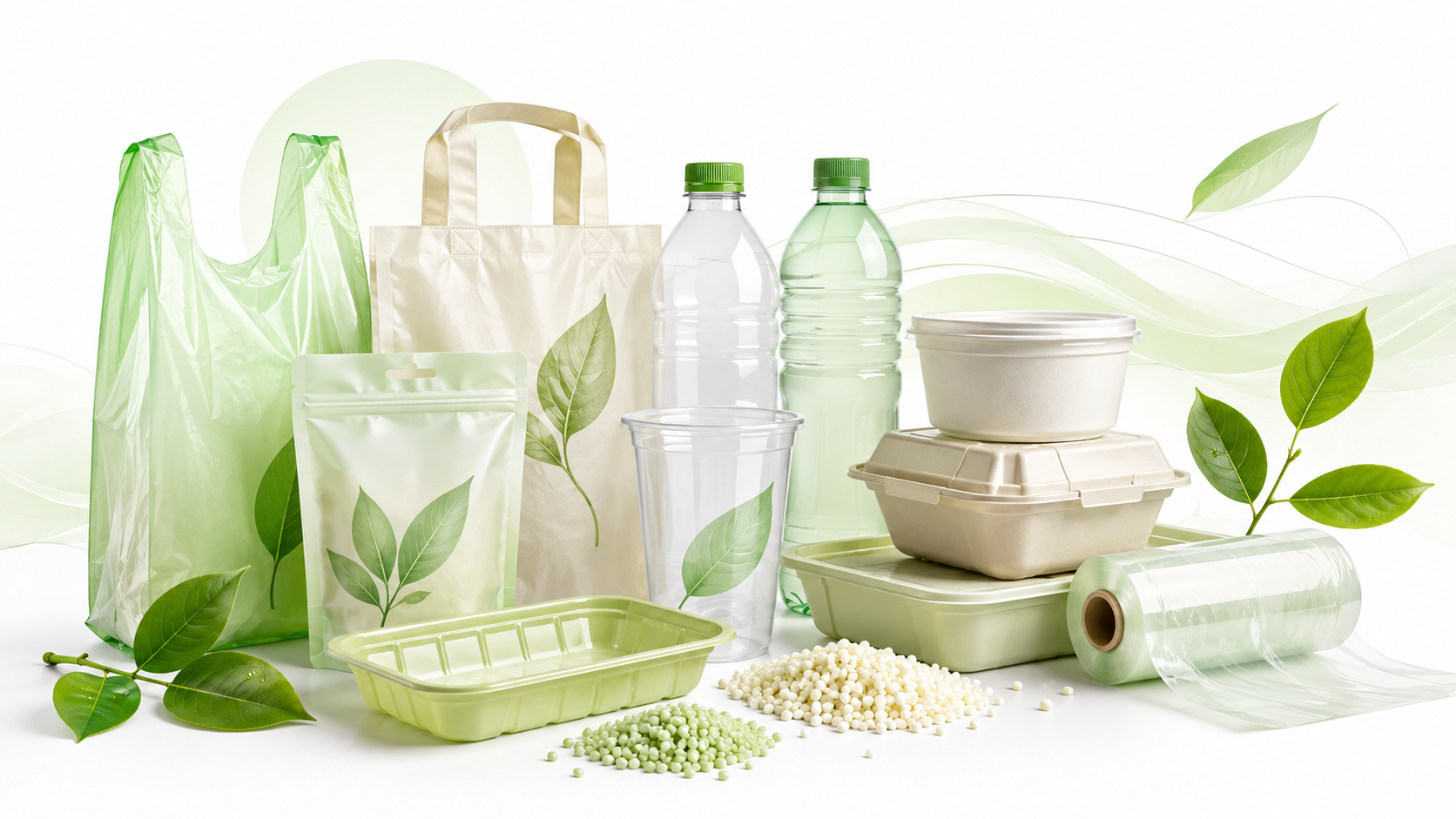
Packaging remained the largest application segment for bioplastics in 2025, accounting for approximately 41.3% of global production capacity, or about 0.95 million tonnes.
7. Figure #6: 10.3% – automotive and transport are emerging bioplastics applications
Automotive and transport applications accounted for approximately 10.3% of global bioplastics production capacity in 2025, equivalent to around 240,000 tonnes. This figure is important because it shows that bioplastics are no longer limited to short-life products such as bags, straws, or food packaging.
In automotive applications, biodegradability is usually not the main objective. Vehicle components are expected to remain functional for many years, so materials must provide long-term durability, dimensional stability, and suitable mechanical performance.
Instead, bio-based plastics can be used to reduce dependence on fossil-derived carbon while maintaining the performance required for durable applications.
Potential uses include:
- interior trim;
- door panels;
- dashboard components;
- seat structures and covers;
- lightweight molded parts;
- selected exterior components;
- transportation-related plastic parts.
The automotive sector also demonstrates an important distinction within the bioplastics market: a material can be bio-based without being biodegradable.
For vehicle manufacturers, environmental performance must therefore be balanced with technical requirements such as:
- tensile strength;
- stiffness;
- impact resistance;
- heat resistance;
- dimensional stability;
- durability;
- processability;
- cost.
The 10.3% share suggests that bioplastics are gradually expanding beyond disposable applications and entering more technically demanding markets. However, adoption will depend on whether these materials can deliver both sustainability benefits and reliable engineering performance.
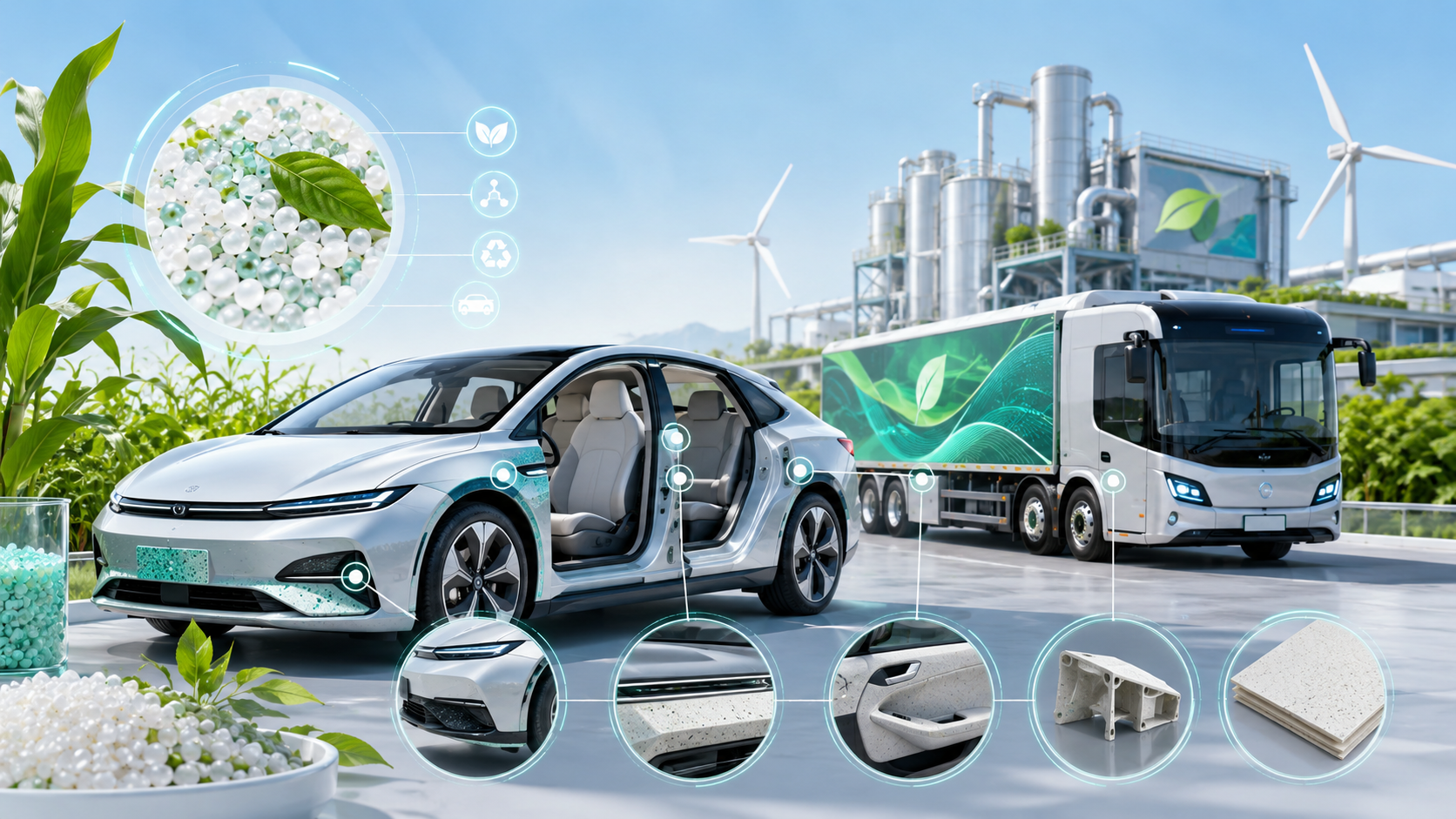
Automotive and transport applications accounted for approximately 10.3% of global bioplastics production capacity in 2025, equivalent to around 240,000 tonnes.
8. Figure #7: 4.69 million tonnes – global bioplastics capacity could more than double by 2030
Global bioplastics production capacity is projected to increase from approximately 2.31 million tonnes in 2025 to 4.69 million tonnes by 2030. This represents an increase of around 2.38 million tonnes, meaning total production capacity could more than double within five years.
The expansion is expected to be supported by several material groups, including PLA, PHA, bio-PE, bio-PP, and other emerging bio-based or biodegradable polymers. However, higher production capacity does not automatically mean that market demand will increase at the same pace.
To assess whether growth is real, four indicators should be monitored together:
-
new capacity coming online;
- actual production volume;
- capacity utilization;
- demand from end-use industries.
For example, if global capacity reaches 4.69 million tonnes but the utilization rate remains at 72%, theoretical production would be approximately 3.38 million tonnes. This is only an illustrative calculation, not an official forecast.
The ability of the market to absorb new capacity will depend heavily on four factors:
-
Cost: Bioplastics must compete with conventional polymers produced at much larger scale.
- Processability: Materials that can run on existing equipment with limited modification will face lower adoption barriers.
- Performance: Mechanical, thermal, barrier, and durability requirements must still be met.
- End-of-life infrastructure: Biodegradable materials need suitable collection and treatment systems to deliver their intended benefits.
The 4.69-million-tonne figure should therefore be interpreted as a sign of strong growth potential, not a guaranteed market outcome.
9. What do the seven figures reveal about the bioplastics market in 2025?
The seven figures provide a concise overview of the current bioplastics market:
-
2.31 million tonnes: global production capacity.
- Approximately 0.5%: share compared with global plastics production.
- 1.67 million tonnes: actual production.
- 72%: average capacity utilization.
- 41.3%: share represented by packaging.
- 10.3%: share represented by automotive and transport.
- 4.69 million tonnes: forecast capacity by 2030.
Together, these figures show that bioplastics are still a small part of the global plastics industry, but they have already reached meaningful commercial scale. The market has moved beyond laboratory development and small pilot projects. More than 1.6 million tonnes of bioplastics were actually produced in 2025, and applications now extend across packaging, consumer goods, agriculture, automotive, transport, and other sectors.
At the same time, the market remains far smaller than conventional plastics such as PE, PP, PET, and PVC. This means bioplastics should be viewed as an expanding material category rather than a complete replacement for conventional plastics. Two main development paths are becoming increasingly clear:
-
Biodegradable plastics for applications where controlled biodegradation or compostability provides a practical benefit.
- Durable bio-based plastics designed to reduce fossil-based content in products with long service lives.
The next stage of market development will depend less on simply adding production capacity and more on whether this capacity can be converted into stable commercial demand.
What do the seven figures reveal about the bioplastics market in 2025?
10. Frequently asked questions about bioplastics
10.1. What are bioplastics?
Bioplastics are plastics that are bio-based, biodegradable, or both. Not all bioplastics are biodegradable.
10.2. Are all bioplastics biodegradable?
No. Bio-PE and bio-PP are examples of bio-based plastics that are not biodegradable, while PBAT can biodegrade under suitable conditions but may still contain fossil-based feedstocks.
10.3. How large was global bioplastics production capacity in 2025?
Global bioplastics production capacity reached approximately 2.31 million tonnes in 2025, while actual production was around 1.67 million tonnes.
10.4. What share of global plastics do bioplastics represent?
Bioplastics represented approximately 0.5% of global plastics production in 2025, meaning they remain a relatively small market segment.
10.5. Which sector uses the most bioplastics?
Packaging is the largest application, accounting for approximately 41.3% of global bioplastics production capacity.
10.6. What are common types of bioplastics?
Common examples include PLA, PHA, PBAT, bio-PE, bio-PP, PBS, and selected bio-based polyamides. Each material has different properties and should be selected based on the intended application.
10.7. How much bioplastics capacity could there be by 2030?
Global production capacity is forecast to reach approximately 4.69 million tonnes by 2030, more than double the 2025 level.
11. Conclusion
Bioplastics remain a small but rapidly developing segment of the global plastics industry. In 2025, global production capacity reached 2.31 million tonnes, with actual output of 1.67 million tonnes and an average capacity utilization rate of 72%.
Packaging remains the largest application, while automotive and transport show that bioplastics are expanding into more durable and technical uses. With global capacity forecast to reach 4.69 million tonnes by 2030, future growth will depend on the ability of these materials to balance performance, cost, processing compatibility, and environmental value.
For manufacturers, the key is not simply to adopt bioplastics as a trend, but to select the right material for the right application.
12. EuroPlas bioplastics – BiONext solutions for diverse applications
Alongside its conventional plastic material portfolio, EuroPlas develops the BiONext range of bioplastic compounds for manufacturers seeking materials for biodegradable products and applications with reduced dependence on fossil-based resources. BiONext compounds can incorporate materials such as PLA, PHA, PBAT, PBS, and TPS, together with suitable additives and other components depending on the requirements of the final application.
Manufacturers developing biodegradable films, packaging, injection-molded products, or other bioplastic applications can contact EuroPlas for material selection support based on their specific production process and product requirements.