Calcium carbonate filler for plastics can help manufacturers reduce material costs and adjust certain product properties, but how much should actually be used? There is no single dosage suitable for every formulation. This article explains how to determine an appropriate filler loading based on material type, processing technology, and final product requirements.
1. Does calcium carbonate filler for plastics have a fixed mixing ratio?
There is no universal dosage of calcium carbonate filler for plastics that works for every application. The suitable level depends on the base polymer, filler masterbatch composition, processing method, product thickness, and the mechanical, surface, and economic requirements of the finished product.
1.1. Why is there no single filler masterbatch ratio for every plastic product?
The same filler masterbatch dosage can produce very different results when the polymer, equipment, or application changes. Therefore, filler loading should be determined for each formulation rather than using one standard percentage across all production processes.
For example, thin PE film requires stable bubble formation, sufficient toughness, and appropriate elongation, while a thick injection-molded part may place greater emphasis on stiffness, dimensional stability, or reduced shrinkage. Likewise, PP raffia used for woven packaging must maintain enough tensile strength during stretching, which means its acceptable filler level may differ significantly from that of a rigid molded product.
Differences can also appear between two factories producing the same type of product. Virgin resin grade, die design, processing temperature, machine speed, and quality standards may all influence how much filler a formulation can tolerate.
For this reason, instead of asking, “What is the standard filler ratio?”, manufacturers should ask which filler loading provides the best balance for their specific formulation and production conditions.

1.2. How does filler masterbatch composition affect the dosage?
The filler masterbatch ratio only shows how much masterbatch is added to the formulation; it does not directly indicate the actual amount of CaCO3 in the final product. If two masterbatches contain different calcium carbonate concentrations, the same addition rate can result in very different mineral filler levels.
According to EuroPlas technical information, filler masterbatch is generally produced from calcium carbonate, a carrier resin, and suitable additives that support processing and dispersion. Depending on the grade and target application, some common filler masterbatch formulations may contain approximately 60–85% CaCO3.
Learn more about what filler masterbatch is and how it is used.
This means that comparing two filler masterbatches based only on price per kilogram or recommended dosage is not enough. Manufacturers should also consider CaCO3 concentration, carrier resin, dispersion quality, and the technical recommendations provided for each grade.
By doing so, the selected dosage reflects the actual mineral content introduced into the formulation rather than simply the percentage of filler masterbatch added.
1.3. Is filler masterbatch dosage the same as CaCO3 content?
No. Filler masterbatch dosage refers to the percentage of masterbatch added to the formulation, while the actual CaCO3 content depends on how much calcium carbonate the masterbatch itself contains. Distinguishing between these two values is essential when designing or comparing plastic formulations.
A simple calculation can be used:
Actual CaCO3 content = Filler masterbatch dosage × CaCO3 content in the masterbatch
For example, if a formulation uses 20% filler masterbatch containing 80% CaCO3, the actual calcium carbonate content in the final blend is approximately:
20% × 80% = 16% CaCO3
Therefore, using “20% filler masterbatch” does not mean that the finished formulation contains 20% calcium carbonate.
This distinction becomes particularly important when switching to another masterbatch grade or comparing materials from different suppliers.
2. How much calcium carbonate filler for plastics should be used for different applications?
The appropriate dosage of calcium carbonate filler for plastics varies by application because each processing method has different requirements for flow behavior, tensile properties, elongation, and product formation. Rather than selecting one fixed percentage, manufacturers should establish a trial range and refine it based on production results.
2.1. How should filler masterbatch dosage be determined for PE film?
For PE film, filler masterbatch dosage should be determined according to film thickness, tensile strength, elongation, bubble stability, opacity, and surface requirements. The thinner the film, the more important calcium carbonate dispersion and control of oversized particles become.
As filler loading increases, the proportion of virgin resin decreases, which may help lower material cost. However, film properties can also change at the same time. If the filler is poorly dispersed or the dosage exceeds what the formulation can tolerate, the film may become easier to tear, less uniform, or more difficult to process consistently.
A 2025 study published in Polymers on CaCO3-filled LDPE films showed that changing filler content can significantly affect selected mechanical and surface properties. This reinforces the need to evaluate filler loading together with the specific performance requirements of each film application.
Read the study in Polymers.
For PE-based applications, EuroPlas provides PE filler masterbatch for processing technologies including blown film, extrusion, and other related applications.
2.2. How should calcium carbonate filler be used in PP woven and raffia applications?
In PP woven and raffia production, filler loading must allow the tape or fiber to retain sufficient tensile strength and elongation throughout the stretching process. Excessive calcium carbonate filler may increase stiffness while reducing toughness or making the material more susceptible to breakage.
This balance is particularly important in raffia production, where the material undergoes continuous stretching. Even a relatively small decrease in tensile performance or material uniformity can increase tape breakage and reduce production efficiency.
Therefore, when increasing filler masterbatch dosage, manufacturers should monitor tensile strength, elongation, tape breakage rate, line speed, and the quality of the finished woven product at the same time.
If the focus is only on how much virgin resin can be replaced, the apparent material savings may be offset by lower productivity or a higher reject rate.
For PP applications, EuroPlas offers PP filler masterbatch for raffia, injection molding, extrusion, and other processing methods.
2.3. How should filler loading be determined for nonwoven fabric?
For nonwoven fabric, filler loading should be based on fiber-forming ability, tensile performance, elongation, and web uniformity. Because the fibers are very fine, the filler system must also be well dispersed to minimize the risk of CaCO3 agglomerates disrupting the spinning process.
For this reason, a filler ratio that works well in woven PP packaging should not automatically be applied to a nonwoven line.
A more suitable approach is to begin with a controlled trial level and then increase the dosage gradually. After each adjustment, manufacturers should monitor line speed, fiber quality, web uniformity, and reject rate.
This step-by-step approach makes it easier to define a stable operating range before moving to full-scale production.
2.4. How should filler masterbatch dosage be evaluated for injection molding?
In injection molding, calcium carbonate filler can help modify stiffness, dimensional stability, shrinkage, and material cost. However, the appropriate loading still needs to be balanced against tensile strength, toughness, and impact requirements for the molded part.
This application clearly demonstrates the trade-offs that can occur when CaCO3 content is increased.
In a study by Yucheng Peng, Munkaila Musah, Brian Via, and Xueqi Wang on polypropylene composites, increasing CaCO3 content from 10% to 50% increased tensile modulus, while tensile strength and elongation at yield decreased.
Read the study in the Journal of Composites Science.
In other words, a stiffer formulation is not necessarily a better formulation if the product still requires toughness, impact resistance, or a certain degree of deformation.
Therefore, the optimal filler loading for injection molding should be based on the complete property profile required for the finished part rather than on stiffness alone.
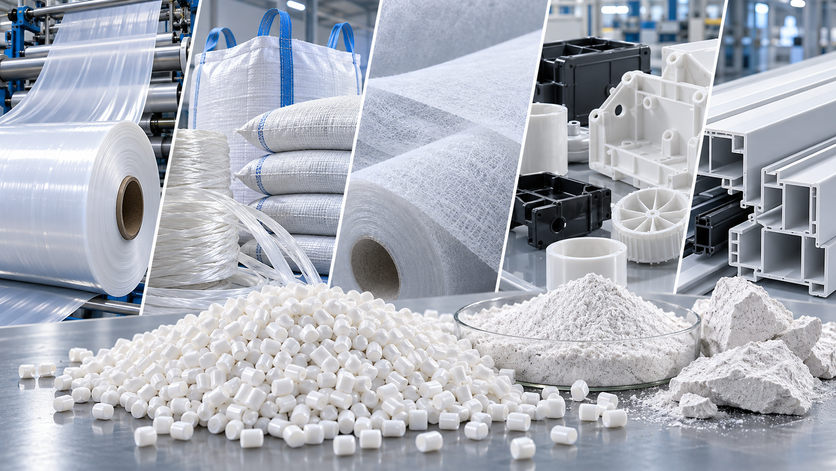
2.5. What should be considered when using filler masterbatch in extrusion?
In extrusion, filler loading should be evaluated together with melt flow behavior, die pressure, motor load, extrusion speed, and surface quality. If the calcium carbonate content exceeds what the formulation or equipment can handle efficiently, productivity may decline even if the raw material cost per kilogram becomes lower.
For sheets, profiles, and other continuously extruded products, stable material flow through the die directly affects dimensional accuracy and surface quality.
As filler dosage increases, manufacturers should therefore monitor changes in pressure, machine load, output rate, product dimensions, and reject levels.
If a higher filler content reduces material cost but forces the extrusion line to run significantly slower, the formulation may not deliver a genuine economic advantage.
3. What determines the right calcium carbonate filler for plastics dosage?
The right dosage of calcium carbonate filler for plastics depends on several closely related factors, including polymer type, CaCO3 concentration, particle size, dispersion, product thickness, and mechanical requirements. A change in any one of these factors can shift the optimal filler loading for the formulation.
3.1. How does polymer type affect filler loading?
Different polymers have different molecular structures, viscosities, and processing behavior, so their ability to accommodate mineral filler also varies. A filler level that performs well in PP should not automatically be transferred to PE, even when the same CaCO3 grade is used.
The carrier resin used in the calcium carbonate masterbatch should also be sufficiently compatible with the main polymer.
When the two resin systems are compatible, the filler can generally be distributed more uniformly throughout the melt. In contrast, poor compatibility may make dispersion more difficult, especially as the filler masterbatch addition rate increases.
For this reason, selecting the appropriate carrier resin is one of the first considerations when choosing a filler masterbatch.
3.2. How does CaCO3 concentration affect filler masterbatch dosage?
The higher the calcium carbonate concentration in the masterbatch, the more mineral filler is introduced at the same addition rate. Therefore, when changing to another filler masterbatch grade, manufacturers should recalculate the actual CaCO3 loading rather than simply keeping the previous dosage unchanged.
For example, using 20% of a masterbatch containing 70% CaCO3 is not equivalent to using 20% of one containing 85% CaCO3.
The second formulation introduces considerably more mineral filler, which may affect stiffness, processing behavior, and mechanical performance.
As a result, CaCO3 concentration and filler masterbatch dosage should always be considered together.
3.3. How do calcium carbonate particle size and dispersion affect filler loading?
Filler dosage cannot be separated from particle quality and dispersion. If CaCO3 particles form large agglomerates, increasing the filler content can make non-uniform regions in the polymer more pronounced, potentially affecting both surface quality and mechanical properties.
Particle size, particle size distribution, surface treatment, and dispersion all influence the way calcium carbonate interacts with the polymer matrix.
Therefore, two filler masterbatch grades containing the same percentage of CaCO3 may behave very differently during processing.
This factor is discussed in greater detail in EuroPlas' article on how calcium carbonate particle size affects plastic properties, which examines the relationship between particle size, dispersion, and material performance.
3.4. How does product thickness affect the appropriate filler content?
Thin products are generally more sensitive to particle size, dispersion, and filler loading. A CaCO3 agglomerate that causes little concern in a thick injection-molded part may become a significant defect in a thin film, raffia tape, or fine fiber.
This is why the same calcium carbonate filler for plastics may have very different recommended dosage ranges depending on the final product.
In film and fiber applications, controlling coarse particles and agglomeration becomes particularly important as filler loading increases.
3.5. How do mechanical requirements affect filler loading?
Filler loading is only suitable if the finished product continues to meet its required mechanical specifications. Applications requiring high toughness or elongation may tolerate less filler than products where stiffness and dimensional stability are the main priorities.
Before increasing CaCO3 content, manufacturers should therefore define the critical requirements for the finished product, such as tensile strength, elongation, impact strength, tear resistance, stiffness, or shrinkage.
The study by Peng and co-authors also demonstrates this trade-off clearly: as CaCO3 content increased in PP, modulus increased while tensile strength and elongation decreased. View the study.
For this reason, filler performance should never be judged by one property alone.
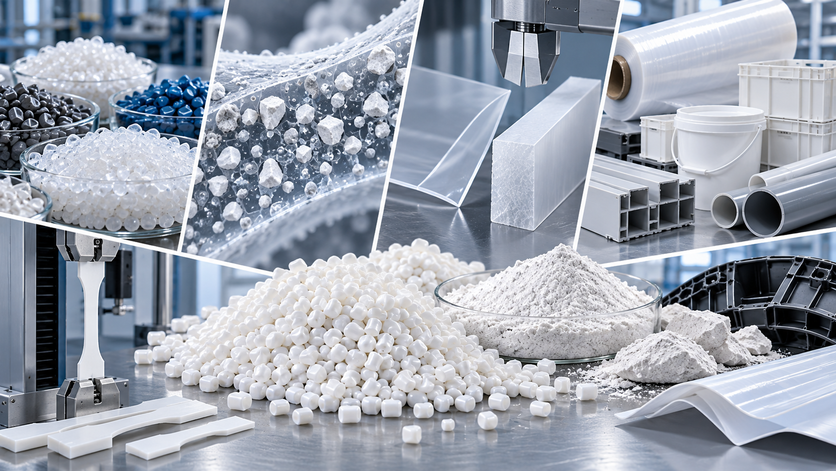
4. What happens when calcium carbonate filler for plastics is too low or too high?
A filler loading that is too low may provide limited economic or technical benefit, while excessive calcium carbonate filler can reduce certain mechanical properties and create processing instability. The objective is therefore not to maximize filler content, but to find the best balance between product performance, productivity, and cost.
4.1. What happens when filler loading is too low?
When the filler level is very low, manufacturers may not fully benefit from replacing part of the virgin resin or modifying properties such as stiffness and shrinkage. However, this does not mean that continually increasing calcium carbonate filler will always produce better results.
A relatively low loading can be used as a starting point to observe how the formulation responds.
If the results remain stable, the dosage can then be increased gradually until the desired economic benefit is achieved while keeping the required technical properties within specification.
This approach allows the formulation to be optimized in a controlled manner and reduces the risk of introducing several major changes at once.
4.2. What problems can occur when filler loading is too high?
When calcium carbonate filler content exceeds a suitable level, elongation, toughness, or load-bearing performance may decrease. Processing can also become less stable, particularly when filler dispersion or compatibility with the polymer matrix is not sufficiently controlled.
On the production line, these effects may appear as film breakage, raffia tape breakage, surface defects, unstable output, or the need to reduce production speed.
The PP study by Peng and colleagues similarly showed that increasing calcium carbonate content can raise modulus while reducing tensile strength and elongation.
This illustrates why increasing filler content always involves trade-offs between different material properties.
4.3. Why does higher filler loading not always reduce total production cost?
A lower raw material cost per kilogram does not necessarily mean a lower total production cost. If a high filler loading reduces line speed, increases scrap, or causes finished products to fall outside specification, the savings from replacing virgin resin can be offset by other losses.
Manufacturers should therefore consider a broader cost structure that includes raw materials, energy consumption, machine time, labor, scrap, and quality-related losses.
A more practical metric is the cost per unit of acceptable finished product.
From this perspective, a filler masterbatch ratio is economically beneficial only when it lowers the overall production cost without creating unacceptable losses in quality or productivity.
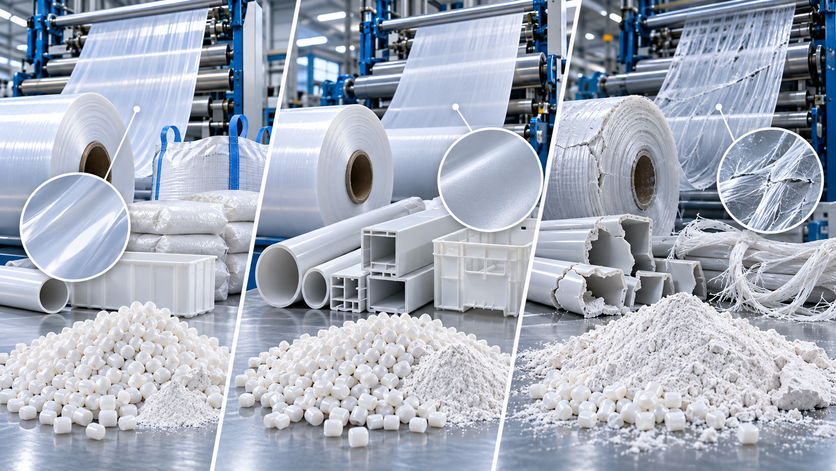
5. How can the optimal calcium carbonate filler for plastics dosage be determined?
The most reliable way to determine the optimal dosage of calcium carbonate filler for plastics is through controlled production trials. Manufacturers should start from the existing formulation or supplier recommendation, adjust filler loading in small steps, and compare the results in terms of mechanical properties, processing stability, and overall cost.
5.1. Where should a filler masterbatch trial begin?
Before changing filler masterbatch dosage, manufacturers should clearly define the current formulation and the mandatory performance requirements of the finished product. This provides a baseline for determining whether increasing or decreasing filler content actually improves performance or simply shifts the balance between different properties.
Once the baseline has been established, a filler masterbatch compatible with the polymer can be selected and tested at an initial dosage based on technical recommendations.
The filler loading can then be increased or decreased gradually while the other processing conditions remain as consistent as possible.
This approach makes it easier to identify the point at which product quality or processing behavior begins to change significantly.
5.2. Which variables should remain constant during filler dosage trials?
To evaluate the true effect of filler loading, the other major variables in the trial should remain as stable as possible. If the resin, temperature, machine speed, and filler masterbatch are all changed at the same time, it becomes difficult to identify what caused the final result.
Where possible, each trial should use the same virgin resin grade, filler masterbatch grade, other additives, processing temperature, machine speed, die or mold configuration, and product thickness.
Keeping these factors consistent improves the value of the comparison between trial batches and makes the optimal dosage easier to identify.

5.3. Which properties should be measured after each trial?
Each filler loading should be assessed using several groups of performance indicators rather than relying only on whether the line can run. A formulation may process smoothly but fail mechanical specifications, while another may provide adequate strength but reduce productivity significantly.
| Evaluation area |
Parameters to monitor |
| Mechanical properties |
Tensile strength, elongation, impact strength, stiffness |
| Processing |
Pressure, machine load, line speed, melt flow |
| Appearance |
Surface quality, opacity, brightness, color |
| Stability |
Film or tape breakage, defects, reject rate |
| Economics |
Material cost, productivity, scrap rate |
By reviewing these indicators together, manufacturers can identify the filler loading that delivers the best overall performance rather than optimizing only one variable.
5.4. When can a filler loading be considered optimal?
The optimal filler loading is not the highest amount of calcium carbonate filler that the production line can process. It is the level at which the product still meets technical specifications, the production process remains stable, and the total manufacturing cost reaches the company's target.
In practical terms:
Optimal filler loading = acceptable quality + stable processing + reasonable cost
If adding more filler causes one of these three factors to deteriorate significantly, the formulation may already have moved beyond its optimal operating range.
This is why filler optimization should be based on trial data rather than copied percentages or assumptions.
6. What common mistakes occur when using calcium carbonate filler for plastics?
Common mistakes when using calcium carbonate filler for plastics include copying another factory's dosage, selecting filler only by CaCO3 concentration, or increasing filler content too aggressively to reduce raw material cost. Each change should instead be validated against the manufacturer's own resin, equipment, and product specifications.
6.1. Should manufacturers copy another factory's filler masterbatch ratio?
No. A filler masterbatch ratio that works well in another factory may not perform the same way on a different production line because of differences in resin, equipment, die design, temperature, product thickness, and quality requirements.
Another manufacturer's ratio can be used as a reference or starting point, but it should not be treated as a universal formulation.
Before full-scale production, the dosage should be tested on the actual production line and evaluated against the relevant technical specifications.
This allows the final decision to be based on the manufacturer's own operating data.
6.2. Should filler masterbatch be selected only by high CaCO3 content?
No. A high CaCO3 concentration does not automatically mean that a filler masterbatch is better or can be used at a higher dosage. Particle size, dispersion, carrier resin, additive package, moisture, and compatibility with the main polymer all influence how the material performs.
In some cases, a filler masterbatch with a lower mineral content but better dispersion and polymer compatibility may provide more stable processing than a higher-CaCO3 grade.
For this reason, calcium carbonate concentration should be considered as one part of the formulation rather than the only purchasing criterion.
6.3. Should filler loading be increased directly to a high level?
No. Filler masterbatch dosage should not be increased aggressively without trial data. Increasing the loading in small steps makes it easier to identify the point at which mechanical performance, process stability, or surface quality begins to deteriorate.
After each trial, the previous formulation should be retained as a control sample.
If issues such as film breakage, raffia tape breakage, lower strength, unstable processing, or surface defects appear, the manufacturer can then identify the approximate dosage range at which the formulation begins to exceed its stable operating window.
6.4. Why should technical data and supplier recommendations be considered?
Each calcium carbonate masterbatch grade is formulated with a specific carrier resin, CaCO3 concentration, and additive system. Therefore, supplier technical data and recommended addition rates can provide a more suitable starting point for trials than choosing a filler dosage based purely on experience or assumptions.
However, supplier recommendations should still be treated as a starting reference rather than an absolute number.
The final filler loading should be confirmed under the manufacturer's actual production conditions.
EuroPlas provides a range of filler masterbatch products for applications including blown film, woven packaging, nonwoven fabric, injection molding, and extrusion.
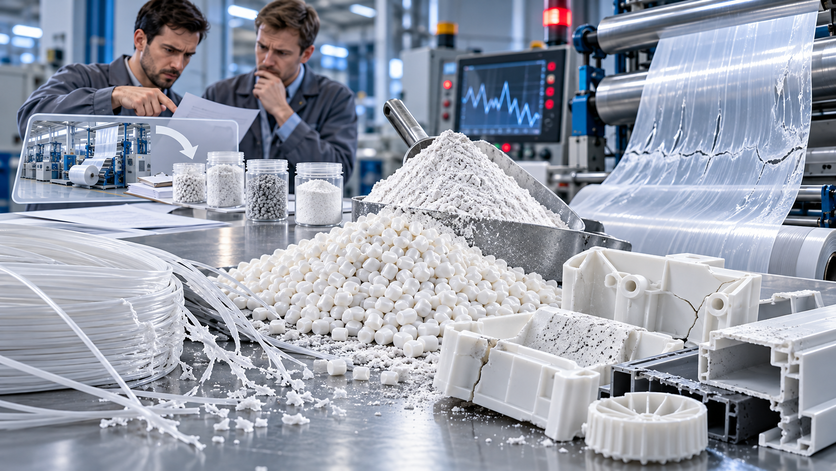
7. Conclusion
There is no single dosage of calcium carbonate filler for plastics that is suitable for every product. The appropriate filler loading depends on the polymer matrix, CaCO3 concentration and quality, dispersion, processing technology, product thickness, and required mechanical properties.
More importantly, the best filler level is not necessarily the highest one.
A formulation is truly optimized when it achieves three objectives at the same time: the finished product meets specification, the production line remains stable, and the total manufacturing cost is economically acceptable.
For this reason, any significant increase in filler masterbatch dosage should be validated through controlled trials and evaluated on the actual finished product before being implemented at full production scale.
8. FAQ
8.1. How much calcium carbonate filler should be used in plastics?
There is no single filler loading suitable for every plastic product. The appropriate dosage depends on the polymer, filler masterbatch grade, processing technology, product thickness, and required mechanical properties. Manufacturers should use technical recommendations as a starting point and refine the dosage through production trials.
8.2. Is there a standard filler masterbatch ratio for all plastics?
No. PE, PP, and other polymers behave differently during processing, while blown film, raffia, injection molding, and extrusion also have different performance requirements. A filler masterbatch ratio that works well in one formulation may therefore be unsuitable for another.
8.3. What filler masterbatch dosage is suitable for PE film?
There is no universal percentage for PE film. The appropriate filler loading should be verified according to film thickness, tensile strength, elongation, bubble stability, surface quality, and calcium carbonate dispersion.
8.4. Can too much calcium carbonate filler reduce plastic strength?
Yes. The effect depends on the polymer matrix, CaCO3 concentration, particle size, and dispersion. Studies on PP composites have shown that increasing calcium carbonate can improve stiffness while reducing tensile strength and elongation, demonstrating the need to evaluate multiple properties together.
See the supporting study.
8.5. Does increasing filler masterbatch always reduce production cost?
No. If a higher filler loading reduces production speed, increases scrap, or causes the finished product to fail specifications, the total production cost may increase rather than decrease. Economic performance should therefore be evaluated based on the cost of acceptable finished products rather than raw material price alone.
8.6. How can actual CaCO3 content in a formulation be calculated?
Multiply the filler masterbatch dosage by the percentage of CaCO3 contained in the masterbatch. For example, if a formulation contains 20% filler masterbatch with 80% CaCO3, the actual calcium carbonate content in the total formulation is approximately 16%.
8.7. Should the filler masterbatch dosage be changed when switching to a new grade?
Possibly. Different filler masterbatch grades may vary in CaCO3 concentration, carrier resin, particle characteristics, and additive system. Therefore, the previous dosage should not automatically be carried over to a new product without conducting production trials.
9. About EUROPLAS
EUROPLAS is the plastic materials brand of European Plastic Joint Stock Company (EuP), one of the world’s leading filler masterbatch manufacturers. With 19 years of experience, EuP operates a network of seven manufacturing plants in Vietnam and Egypt, with a total production capacity of approximately 0.9 million tons per year and exports to more than 95 countries worldwide. In addition to filler masterbatch as its core product line, EuP offers a diversified portfolio of material solutions, including color masterbatch, additive masterbatch, engineering plastic compounds, bioplastic compounds, and bio fillers for a wide range of plastic manufacturing applications.
EUROPLAS provides a range of calcium carbonate filler masterbatch solutions developed from CaCO3, suitable carrier resins, and additive systems for different plastic processing technologies. The portfolio includes PE- and PP-based filler masterbatches for applications such as blown film, woven packaging, nonwoven fabric, injection molding, and extrusion.
For PE-based applications, EFPE 1001 filler masterbatch is designed for processing technologies including blown film, woven packaging, injection molding, and extrusion.
For PP-based applications, EFPP 1001 filler masterbatch combines calcium carbonate with a PP carrier resin and suitable additives for applications such as woven packaging, injection molding, and extrusion.
To identify a suitable filler masterbatch grade and trial dosage range, manufacturers can provide EUROPLAS with information about the virgin resin, processing method, current filler loading, operating conditions, and finished-product requirements. This allows the selection of calcium carbonate filler for plastics to be aligned more closely with actual production conditions.
The dosage ranges and technical information discussed in this article are for reference purposes. Filler masterbatch loading should be validated for each formulation, processing line, and finished-product specification before full-scale production.
10. About the Author
EuP Technical Content Team
This article was prepared by the EuP Technical Content Team in collaboration with EuP's specialist team, based on knowledge and experience in plastic materials, masterbatch, additives, and engineering plastic compounds. EuP aims to provide clear and practical technical information to help manufacturers better understand material properties, potential applications, and key considerations when selecting plastic materials for production.
The information provided in this article is for reference purposes. Formulation, loading levels, and material performance should be evaluated according to the polymer type, processing technology, and actual end-use conditions.