In the engineering plastics industry, PA66 (Polyamide 66 or Nylon 66) has become one of the most widely used materials thanks to its heat resistance, good mechanical strength, and flexible processability . Originally developed by DuPont in the 1930s, PA66 has evolved into countless variants designed to meet increasingly demanding industrial requirements. However, when comparing virgin PA66 with PA66 GF30—PA66 reinforced with 30% glass fiber—many people are still unsure about the real differences between these two materials and which one is more suitable for their specific applications.
This article provides a comprehensive and detailed view of the differences between PA66 GF30 and virgin PA66, covering everything from chemical structure and mechanical properties to real-world applications and selection criteria . Through specific technical data, industry examples, and expert insights, readers will have enough information to make an informed decision when choosing materials for their projects. Whether you're designing automotive components, electrical housings, or mechanical parts, understanding these differences is crucial for achieving optimal performance and cost-efficiency.
1. Understanding virgin PA66 and PA66 GF30
1.1. Virgin PA66 - Characteristics and applications
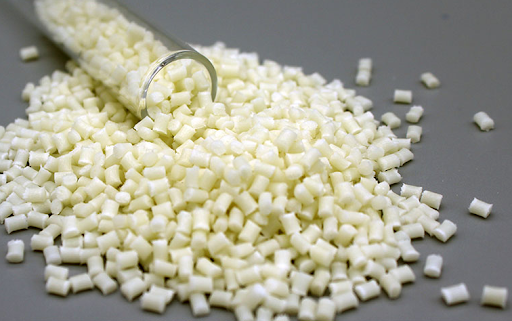
Virgin PA66 is an engineering plastic synthesized directly from adipic acid and hexamethylene diamine monomers . Unlike recycled plastics, virgin PA66 is produced entirely new, ensuring high uniformity . The material is milky translucent white and has a linear polyamide structure, enabling strong hydrogen bonding between polymer chains.
Basic technical data of virgin PA66:
- Density: 1.15 g/cm³
- Tensile strength: ~100 MPa
- Tensile modulus: 4.60 GPa
- Melting point: 252°C
- Service temperature: 80-120°C
- Water absorption: 2.5-7% depending on environment
Virgin PA66 shows good stability against oils, organic solvents, and common industrial chemicals . Key applications include premium textile fibers, automotive airbags, seatbelts, electronic housings, bearings, and gears thanks to its high surface gloss and low friction coefficient . Its biggest advantages are easy processing and reasonable cost.
1.2. PA66 GF30 - A superior reinforced material
PA66 GF30 is a composite material made by reinforcing virgin PA66 with 30% glass fiber by weight . Glass fibers with a diameter of 10-20 micrometers and a length of 3-6 mm are evenly dispersed into the PA66 matrix through a twin-screw extrusion process . This technology addresses limitations in stiffness, strength, and creep resistance found in virgin PA66 .
Key technical data of PA66 GF30:
- Density: 1.38 g/cm³ (about 20% heavier)
- Tensile strength: 180 MPa (about 80% higher)
- Impact strength: 13 kJ/m² (2-3 times higher)
- Continuous service temperature: 150-160°C
- Compressive modulus: 4100 MPa
- Water absorption: 3-4% (about 50% lower)
The keyword “pa66 gf30” is increasingly common in technical documentation, reflecting rising demand for high-performance materials.
1.3. Pros and cons of PA66 GF30
PA66 GF30 offers many advantages for demanding engineering applications. A tensile strength of 180 MPa allows thinner components while maintaining comparable strength . Many automotive manufacturers have replaced metal parts with PA66 GF30 to reduce vehicle weight.
Main advantages:
- High stiffness and dimensional stability; shrinkage is only about one-third of virgin PA66
- Creep resistance is 2-3 times better
- Stable continuous use at 150-160°C
- Water absorption reduced to 3-4%
Key drawbacks to note:
- High abrasiveness; not suitable for sliding applications
- 30-50% higher cost
- More difficult to process; requires specialized equipment
- Mold life reduced by 30-50%
- Higher brittleness at low temperatures
PA66 GF30 is widely used for automotive fuel tanks, engine fans, high-voltage circuit breaker housings, and load-bearing mechanical parts .
2. Detailed comparison of PA66 GF30 and virgin PA66
2.1. Mechanical property comparison table
| Property |
Virgin PA66 |
PA66 GF30 |
Differences |
| Density (g/cm³) |
1.15 |
1.38 |
+20% |
| Tensile strength (MPa) |
100 |
180 |
+80% |
| Tensile modulus (GPa) |
4.6 |
>6.0
|
+30% |
| Water absorption (%) |
7.0 |
3-4 |
-50% |
| Continuous service temp (°C) |
80 - 120 |
150-160 |
+40(°C) |
| Impact strength (kJ/m2) |
5.5 |
13 |
+136% |
The 80% increase in tensile strength is the most significant difference, enabling thinner designs while maintaining high safety margins.
2.2. Creep resistance and water absorption
Creep resistance is the most critical difference between the two materials. PA66 GF30 has 2-3 times better creep resistance than virgin PA66 . A device bracket made from virgin PA66 may sag several millimeters after a few months, while PA66 GF30 may sag only 0.3-0.5 mm, maintaining high precision throughout the product lifecycle.
Virgin PA66 can absorb up to 7% water when fully immersed, which can increase dimensions by 0.3-0.5% and reduce strength by 20-30% . By contrast, PA66 GF30 absorbs only 3-4% water because glass fiber does not absorb water . This helps PA66 GF30 maintain stable properties in humid environments.
2.3. Processability
Virgin PA66 is easy to process with a melt temperature of 270-290°C, injection pressure of 80-120 MPa, high surface smoothness, and low mold cost . PA66 GF30 requires higher melt temperature (280-300°C), higher pressure (100-150 MPa), and molds made from higher-grade steel due to its abrasiveness .
Processing challenges of PA66 GF30:
- Mold life reduced by 30-50%
- Diamond/carbide tooling required for machining
- 40-60% higher initial investment
- Fiber orientation creates anisotropic mechanical properties
3. When should you choose PA66 GF30 instead of virgin PA66?
3.1. Criteria for choosing PA66 GF30
PA66 GF30 is preferred when an application requires high stiffness and mechanical strength, large loads, or strong impact resistance . Operating temperatures above 120°C over long periods are also a key reason to choose PA66 GF30 .
Choose PA66 GF30 when:
- Parts must carry long-term static loads
- High dimensional stability is required
- Working conditions include high temperatures and high humidity
- Replacing metal parts to reduce weight
3.2. Criteria for choosing virgin PA66
Virgin PA66 is suitable for applications requiring toughness, smooth surface finish, and cost optimization .
Choose virgin PA66 when:
- Sliding/friction applications require low friction
- Interior parts and electronic housings are not heavily loaded
- Producing textile fibers and belts
- Projects have limited budgets
3.3. Real-world application comparison
In automotive applications, PA66 GF30 is used for fuel tanks that must withstand pressure and heat, and for engine fans that require stiffness to maintain blade shape at high speed . Virgin PA66 is suitable for interior parts such as door handles and control knobs where glossy surface finish is preferred. In the electrical industry, high-voltage breaker housings often use PA66 GF30 , while consumer electronics housings commonly use virgin PA66.
4. Trends and development
4.1. Trends in using PA66 GF30
PA66 GF30 is growing strongly in automotive applications to reduce component weight by 30-50% compared with metal . The market is also developing PA66 GF15, GF35, and GF50 variants to meet diverse needs . New formulations combining flame retardants, UV stabilizers, and hybrid reinforcement with carbon fiber are also being researched .
4.2. Modern manufacturing technology
PA66 GF30 manufacturing is being improved with modern twin-screw extrusion to enhance fiber dispersion. Glass fiber surface coating technology helps reduce abrasiveness and improve compatibility between fibers and the polymer matrix. Sustainability trends are also driving development of bio-based PA66 and more effective recycling processes.
5. Conclusion
PA66 GF30 and virgin PA66 have clearly different properties. PA66 GF30 outperforms in strength (about 80% higher), stiffness, creep resistance (2-3 times better), and heat resistance (30-40°C higher) . These benefits come with higher cost, higher abrasiveness, and more difficult processing .
Choosing between the two materials should be based on the application’s technical requirements. PA66 GF30 is optimal for high-strength, long-term load-bearing, and high-temperature applications . Virgin PA66 is suitable for applications needing toughness, smooth surface finish, and cost efficiency . The keyword “pa66 gf30” is increasingly important, reflecting the trend toward higher-performance materials in modern industry.
6. Frequently asked questions (FAQ)
1. Can PA66 GF30 completely replace virgin PA66?
No. Each material has its own strengths. PA66 GF30 is stronger but more abrasive and not suitable for sliding applications . Virgin PA66 is better for applications requiring toughness and lower cost .
2. How much more expensive is PA66 GF30?
PA66 GF30 is typically 30-50% more expensive depending on brand and specification . Mold and maintenance costs are also higher.
3. Can PA66 GF30 be recycled?
It can be recycled, but it is much more complex. Fiber length decreases after each recycling cycle, significantly reducing mechanical properties.
4. Why does PA66 GF30 wear molds faster?
Glass fiber is very hard, creating an abrasive effect as melt flows across mold surfaces under high pressure .
5. How can you distinguish PA66 GF30 from virgin PA66?
PA66 GF30 is heavier (1.38 vs 1.15 g/cm³), often looks more matte gray/black, and may show fiber marks on the surface . Cutting produces white dust (glass fiber) and wears tools faster.
7. About EUROPLAS
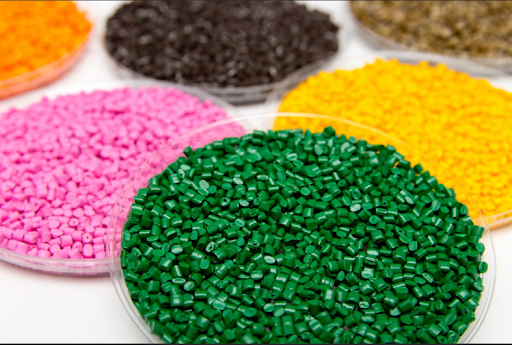
EUROPLAS is one of the world's leading manufacturers of compounds and masterbatches, providing advanced polymer solutions to over 95 countries. With state-of-the-art technology and international quality standards, EUROPLAS is always at the forefront of building a green and sustainable materials ecosystem.
EUROPLAS's polyamide portfolio includes:
With renewable raw materials combined with advanced compounding technology, EUROPLAS helps global businesses accelerate their sustainable materials adoption without compromising performance or product durability. Contact us today for more information.
8. About the Author
EuroPlas Technical Content Team
This article was prepared by the EuroPlas specialist team based on knowledge and experience in plastic materials, masterbatch, additives, and engineering plastic compounds. EuroPlas aims to provide clear and practical technical information to help manufacturers better understand material properties, potential applications, and key considerations when selecting plastic materials for production.
The information provided in this article is for reference purposes. Formulation, loading levels, and material performance should be evaluated according to the polymer type, processing technology, and actual end-use conditions.