Recycled Polyamide vs. Biobased Polyamide: What Are the Differences?
As sustainability becomes a strategic requirement rather than a marketing option, plastic manufacturers are increasingly evaluating alternatives to conventional fossil-based nylon. Among the most discussed solutions today are recycled polyamide and biobased polyamide. Although both materials aim to reduce environmental impact, they differ fundamentally in raw material origin, sustainability approach, performance consistency, and application suitability. Understanding the differences between recycled vs biobased polyamide is essential for manufacturers seeking to balance technical performance, regulatory compliance, and long-term sustainability goals.
1. Understanding Recycled Polyamide and Biobased Polyamide
1.1. What is Recycled Polyamide?
Recycled polyamide refers to nylon materials produced from recovered polyamide waste rather than virgin fossil-based feedstocks. This waste may come from post-industrial scrap, such as production offcuts and rejected parts, or from post-consumer sources including discarded textiles, carpets, fishing nets, and industrial components.
Commercially, recycled polyamide is most commonly available as recycled PA6 and recycled PA66, reflecting the dominance of these grades in global nylon consumption. According to EUROPLAS, modern recycling technologies allow recycled polyamide to retain a high proportion of the mechanical properties of virgin nylon when supported by appropriate compounding and stabilization techniques.
Read more: Recycled Polyamide: Everything You Need to Know in 2025
1.2. What is Biobased Polyamide?
Biobased polyamide is nylon produced using renewable biomass-derived feedstocks, partially or fully replacing fossil-based carbon sources. While its chemical structure is similar to conventional polyamide, the carbon content originates from biological sources such as plants rather than petroleum.
Common biobased polyamide grades include PA11, PA12, PA610, PA410, and PA1010, many of which are derived from castor oil. EUROPLAS notes that these materials are already used in demanding technical applications, demonstrating that renewable feedstocks do not inherently compromise performance.
Read more: Biobased Polyamide: The Future of Sustainable Engineering Plastics
1.3. Core sustainability distinction
The fundamental difference lies in their sustainability logic. Recycled polyamide supports a circular economy model, focusing on waste reduction and material reuse. Biobased polyamide, in contrast, supports a renewable resource model, aiming to reduce reliance on fossil feedstocks by introducing biogenic carbon into polymer production.

Understanding Recycled Polyamide and Biobased Polyamide
2. How Each Polyamide Is Produced
2.1. Production of Recycled Polyamide
Mechanical Recycling
Mechanical recycling involves collecting used polyamide waste, sorting by grade and colour, cleaning, shredding or granulating, then melting and pelletising for reuse. This path is relatively low cost and energy efficient compared to virgin production, but repeated processing may reduce molecular weight and degrade mechanical properties. (PMC)
Chemical Recycling
Chemical recycling breaks down nylon polymers into their monomer building blocks (for example caprolactam) which can then be repolymerised into high-quality polyamide. This route supports higher purity and virtually virgin equivalent performance. A recent paper describes this as a key access route for recycled and bio-based polyamides. (ResearchGate)
Key Challenges
One challenge for recycled polyamide is contamination and mixed waste streams which can reduce quality and consistency. Also, repeated mechanical recycling may lower performance unless compensation is made via additives or chain extenders. (PMC)
2.2. Production of Biobased Polyamide
Biomass Extraction & Monomer Creation
Biobased polyamide begins with renewable biomass feedstocks—such as castor oil for PA11, sugarcane derivatives or agricultural residues. The biomass is converted into monomers which then participate in polycondensation or ring-opening polymerisation. For example, research from KAIST highlights metabolic-engineering approaches to produce polyamide monomers from renewable sources. (KAIST News)
Polymerization Process
Once the monomers are produced, they are polymerised into nylon chains, then compounded with fillers, stabilisers or additives to meet engineering requirements. Because the backbone remains similar to conventional nylon, processing is often more straightforward for manufacturers.
Certification & Traceability
To validate claims of “biobased” content and sustainable origin, many manufacturers adopt certification schemes such as ISCC+, USDA BioPreferred, or TÜV OK Biobased. These systems ensure that the volume of renewable feedstock is tracked and verified. (EuroPlas)
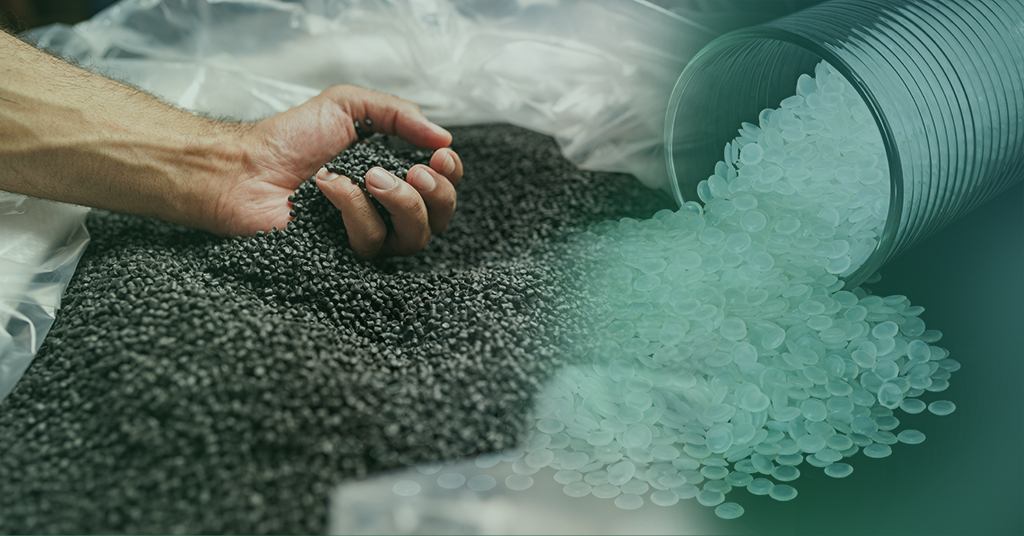
How Each Polyamide Is Produced
3. Comparing Material Properties & Performance
3.1. Mechanical Strength & Durability
Both recycled and biobased polyamides can deliver high mechanical performance, but with some distinctions. For recycled polyamide, especially when chemical recycling is applied, performance can approach virgin materials. For biobased polyamide, many grades demonstrate mechanical properties on par with fossil-derived nylons—for instance a review of biobased PAs observed tensile strength in the range of 40-80 MPa and thermal decomposition above 300 °C. (MDPI)
3.2. Thermal Performance
Thermal performance—such as heat deflection temperature and long-term stability under elevated temperatures—is critical in engineering plastics. Biobased polyamides often achieve comparable thermal stability to conventional nylon (e.g., decomposition temperatures around 380 °C were recorded in some biobased PA studies). (MDPI)
In recycled polyamide, thermal performance depends on the recycling route—chemical recycling retains high molecular weight and thermal stability, while repeated mechanical recycling may degrade properties unless compensated by additives.
3.3. Chemical Resistance
Many applications demand resistance to fuel, oils, solvents, and cleaning agents. Because both materials share the polyamide backbone, strong chemical resistance is retained. However, recycled grades may require additional stabilisers if degradation has occurred.
3.4. Moisture Absorption & Dimensional Stability
Nylons are known to absorb moisture, which can affect mechanical and dimensional stability. In both recycled and biobased polyamide grades, moisture uptake is a factor—good compound formulation helps manage this. Biobased polyamides may present slightly better control if reinforced properly with fillers and stabilisers.
3.5. Table: Recycled Polyamide vs. Biobased Polyamide
| Property |
Recycled Polyamide |
Biobased Polyamide |
| Origin |
Waste-based feedstock, pre-used nylon |
Renewable biomass feedstock |
| Carbon footprint |
Lower than virgin (avoids new fossil) |
Lower / very low fossil carbon |
| Molecular structure |
Same polymer backbone (nylon) |
Same backbone |
| Performance potential |
High (especially chemical-recycled) |
High, often similar to virgin |
| Cost |
Often more cost-effective |
Typically premium cost |
| Supply chain |
Dependent on waste collection & sorting |
Dependent on biomass supply & conversion |
| Certifications |
Often internal/ISO based |
ISCC+, USDA, TÜV OK Biobased |
| Best-use case |
Waste reduction, circular loop |
Renewables shift, new-build applications |
*Note: Actual performance will depend on grade, reinforcement and processing.
4. Applications: Which Material Fits Your Needs?
Understanding where recycled polyamide and biobased polyamide perform best is key to choosing the right material. While both apply to high-performance environments, each shines in different situations depending on technical requirements, sustainability goals and cost considerations.
4.1. Automotive Industry
The automotive sector has traditionally been one of the largest consumers of polyamide—thanks to its combination of strength, heat resistance and durability. Today, both recycled and biobased PA materials are increasingly adopted to support OEM sustainability targets.
Recycled polyamide is widely used in:
- wheel-arch liners
- engine covers
- interior components
- cable protection systems
Because chemical-recycled PA can achieve near-virgin molecular weight, engineers often specify it for under-the-hood parts without sacrificing performance. Studies confirm that recycled PA maintains high tensile strength and thermal stability when properly stabilised. (pmc.ncbi.nlm.nih.gov)
Meanwhile, biobased polyamide is gaining adoption in:
- lightweight EV components
- fuel-line systems
- brake-line tubing
- high-temperature electrical connectors
Biobased PA11 and PA610, often derived from castor oil, offer low moisture uptake and excellent chemical resistance—making them ideal for EV platforms where reliability is crucial. The MDPI review highlights that biobased PA grades can reach decomposition temperatures above 300°C, supporting use in demanding thermal environments. (mdpi.com)
4.2. Electronics & Electrical Components
Electronics manufacturing requires materials with excellent dielectric strength, consistent dimensional stability and flame resistance.
- Recycled PA (especially glass-filled types) is commonly used for electrical housings, cable ties and consumer appliance parts.
- Biobased PA is chosen when brands want a more premium, eco-centric material without compromising mechanical or thermal performance.
Tech companies pursuing carbon-neutral product lines increasingly select biobased materials certified under ISCC+ or BioPreferred. (europlas.com.vn)
4.3. Textiles & Apparel
The textile sector relies heavily on polyamide fibres for sportswear, swimwear, hosiery and performance clothing. Both recycled and biobased versions have strong traction in 2025—but for different reasons.
- Recycled polyamide fibres help fashion brands tackle post-consumer waste and meet circular-fashion commitments.
- Biobased PA fibres provide a soft feel, excellent elasticity and strong UV resistance while using renewable feedstock.
Given the rapid rise of sustainable fashion, many brands now use both materials: recycled PA for waste reduction, biobased PA for renewable-content goals.
4.4. Packaging, 3D Printing & Industrial Uses
Both material types extend into industrial and advanced-manufacturing applications.
- Recycled PA is common in 3D-printing filaments, industrial housings and precision parts.
- Biobased PA offers superior consistency for SLS (Selective Laser Sintering) and high-strength FDM applications.
In packaging, biobased PA films provide better oxygen-barrier performance, ideal for food or medical packaging requiring long shelf life
5. Cost, Scalability & Supply Chain Considerations
5.1. Cost Comparison
In general:
- Recycled polyamide is more cost-competitive due to reduced raw-material cost and higher waste availability.
- Biobased polyamide often carries a price premium due to the cost of biomass feedstock, conversion processes and certification.
5.2. Availability & Production Scale
Recycled PA availability depends on waste-collection infrastructure, which varies by region. Biobased PA depends on agricultural feedstock supply, such as castor oil, which is geographically concentrated.
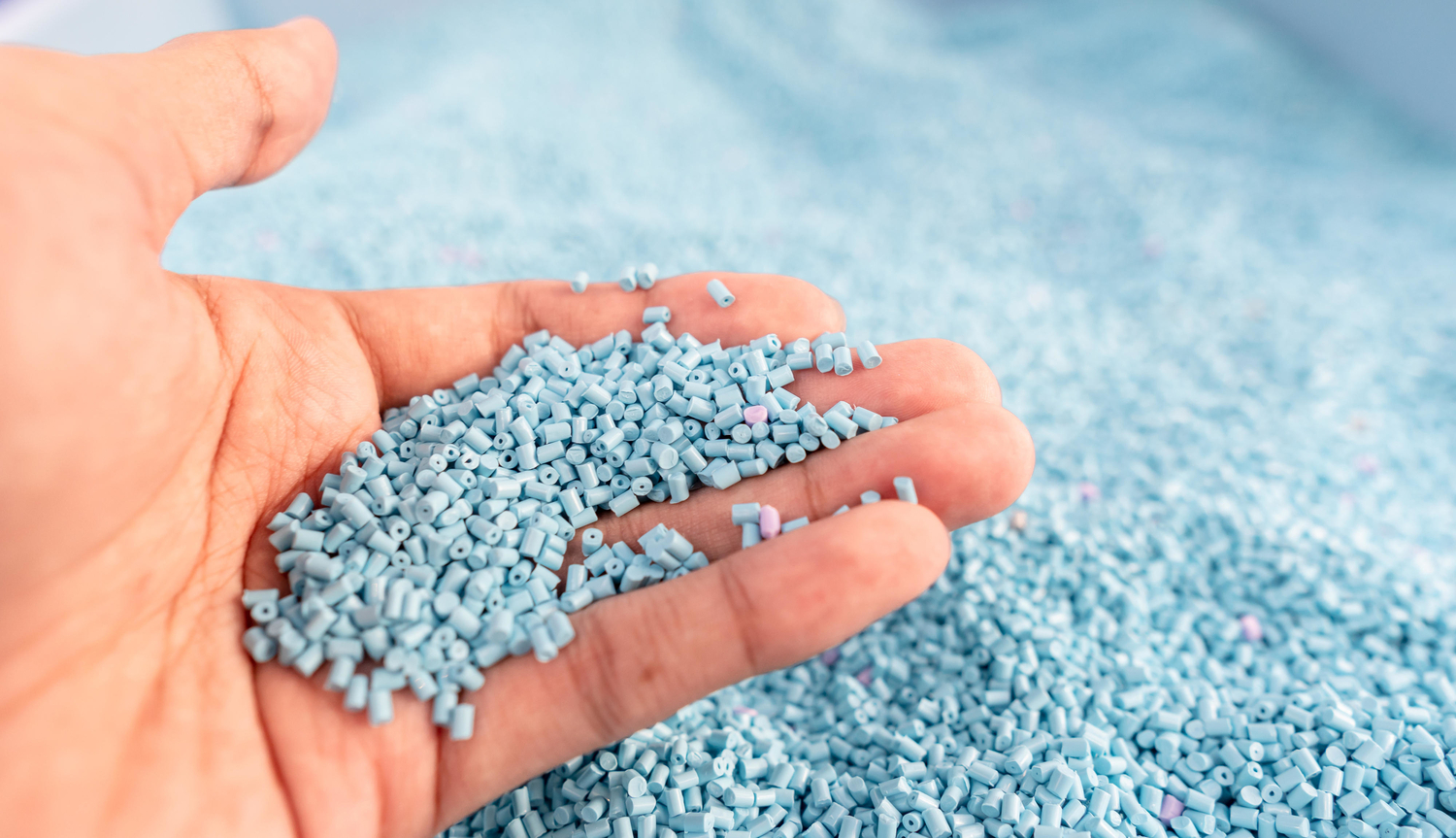
Recycled polyamide is more cost-competitive due to reduced raw-material cost and higher waste availability.
6. How to Choose Between Recycled and Biobased Polyamide
Selecting the right polymer depends on performance requirements and sustainability objectives.
- Choose recycled polyamide if your priority is:
- Waste reduction
- Closing the material loop
- Lower cost
- High-volume applications
- Mechanical performance similar to virgin (especially with chemical recycling)
Choose biobased polyamide if your priority is:
- Renewable-carbon content
- Premium sustainability positioning
- High chemical resistance
- Lower moisture absorption (e.g., PA11)
- Lightweight components for EVs and electronics
7. Conclusion
Recycled and biobased polyamide are not competitors—they are complementary solutions in the shift toward sustainable engineering plastics. Recycled polyamide is ideal for circularity and waste reduction, while biobased polyamide accelerates the transition toward renewable carbon sources.
Manufacturers who understand the strengths of each can build more resilient, sustainable and future-ready products.
8. About EUROPLAS
EUROPLAS is a global manufacturer of masterbatch and compound solutions, supporting plastic manufacturers in over 95 countries. With strong expertise in engineering plastics, EUROPLAS provides both recycled polyamide and biobased polyamide solutions tailored to automotive, electrical, industrial, and consumer applications.
Through advanced compounding technology and strict quality control, EUROPLAS helps manufacturers adopt sustainable polyamide materials without compromising performance, consistency, or productivity: