PA66 GF30 is PA66 reinforced with 30% glass fiber, which can increase stiffness by approximately 2.5–3 times compared with unfilled PA66 while improving load-bearing capacity, dimensional stability, and resistance to deformation. The 30% glass fiber content is widely used because it provides a practical balance between mechanical performance and processability, making PA66 GF30 suitable for automotive, electrical and electronic, and industrial engineering components. However, its performance depends not only on glass fiber content but also on fiber orientation, fiber length, part design, and injection molding conditions.
This article examines the importance of 30% glass fiber (GF30) in PA66 from a combined material, manufacturing, and real-world application perspective, drawing on hands-on experience with PA66 GF30, technical data, and documentation from established material manufacturers.
1. The Importance of 30% Glass Fiber (GF30) in PA66
In the field of engineering plastics, not every improvement comes from switching to an entirely new material. Many meaningful performance upgrades result from reinforcing a familiar base material in the right way. For PA66, a glass fiber content of 30%—commonly referred to as GF30—is a clear example of this approach.
In practice, GF30 is not simply about “adding fiber to make the material stiffer.” It fundamentally changes how PA66 responds to mechanical loads, heat, and long-term service conditions. This is why PA66 GF30 is increasingly used in applications that demand dimensional stability and long-term reliability—requirements that virgin PA66 may struggle to meet on its own.
2. What Is GF30 and Why Does the 30% Ratio Matter?
2.1. GF30: More Than Just a Number on a Datasheet
GF30 means that approximately 30% of the material’s weight consists of glass fiber dispersed within the PA66 matrix. At this level, the fiber content is sufficient to form an effective reinforcement network, significantly improving the material’s modulus and load-bearing capability.
At lower fiber levels, reinforcement effects may be too limited for long-term load applications. At much higher fiber contents, the material can become more brittle, harder to process, and significantly more abrasive to molds. This is why 30% is widely regarded as a balanced point between mechanical performance and manufacturing practicality.
2.2. How GF30 Changes the “Behavior” of PA66
Virgin PA66 is well known for its toughness and relatively good impact resistance. However, under sustained static load or elevated temperatures, it tends to exhibit creep, gradually deforming over time. Introducing glass fiber at the 30% level significantly alters this behavior.
From production experience, PA66 GF30 retains its shape far more effectively when components are subjected to continuous load. This becomes especially important in assembled parts, where even small dimensional changes can compromise the performance of the entire system.
3. Which Properties of PA66 Are Enhanced by GF30?
3.1. Stiffness and Load-Bearing Capability
The most immediately noticeable effect of GF30 is a substantial increase in stiffness. With the internal glass fiber framework carrying much of the stress, PA66 GF30 can withstand higher loads with less deformation than virgin PA66. This is why it is commonly selected for structural components or for replacing metal in weight-sensitive applications.
3.2. Long-Term Dimensional Stability
Another critical—but often underestimated—benefit is long-term dimensional stability. PA66 GF30 is less prone to shrinkage and deformation when exposed to heat or sustained load over time. For applications that require tight assembly tolerances, this characteristic is often a deciding factor.
3.3. Performance at Elevated Temperatures
GF30 also helps PA66 maintain mechanical properties at higher operating temperatures. In many industrial and automotive applications, plastic components are located near heat sources. In these conditions, PA66 GF30 demonstrates better stiffness retention and shape stability than virgin PA66.
4. How Does GF30 Actually Affect PA66 Processing?
When moving from virgin PA66 to PA66 GF30, many manufacturers initially expect that simply changing the material will automatically result in stiffer and more stable parts. In reality, GF30 only delivers its full value when the entire processing mindset is adjusted accordingly. Applying the same molding parameters, gate design, and temperature control used for virgin PA66 often leads to issues rather than improvements.
PA66 GF30 exhibits different crystallization behavior and melt flow characteristics, and it is far more sensitive to mold temperature conditions. According to DuPont’s processing guidelines, glass fiber–reinforced nylons require higher and more stable mold temperatures to allow proper crystallization and to reduce residual internal stresses. This explains why, in many practical cases, increasing mold temperature by a moderate margin can significantly improve dimensional stability, even without changing the mold design or material grade.
Another noticeable difference lies in surface appearance. Due to the presence of glass fibers, PA66 GF30 rarely produces the smooth surface typically associated with virgin PA66. However, in the context of engineering plastics, this should not be viewed as a quality defect, but rather as a natural characteristic of fiber-reinforced materials. For PA66 GF30, functional stability and long-term reliability take priority over cosmetic surface finish.
5. Mold Wear: An Inevitable Trade-Off, Not a Hidden Risk
One of the most common concerns when switching to PA66 GF30 is mold wear. This concern is well justified. Glass fibers are inherently abrasive, and when they flow repeatedly at high velocity through the mold cavity, wear gradually accumulates—especially at gates, runners, and flow direction changes.
However, mold wear should not be seen as an unexpected risk, but as a predictable and manageable trade-off. In many production cases, issues arise not because of the material itself, but because mold design and steel selection were not adequately upgraded to match the reinforcement level. When proper mold steels and surface treatments are used, the impact on mold lifetime becomes far more controllable.
From a manufacturing perspective, the key question is not whether mold wear exists, but whether the overall cost balance makes sense. For components that must maintain shape and performance over long service periods, investing more in tooling upfront is often far less costly than dealing with product deformation, field failures, or recalls later in the product lifecycle.
6. Designing with GF30: Where Most Problems Truly Begin
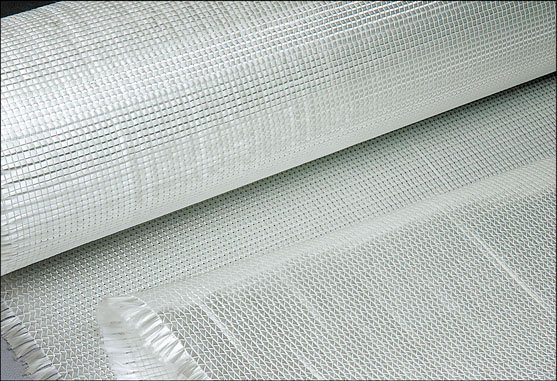
Many issues attributed to PA66 GF30 actually originate from designs that fail to account for fiber-reinforced behavior. Unlike virgin PA66, PA66 GF30 is not isotropic. Its mechanical properties vary depending on direction.
During injection molding, glass fibers tend to align with the melt flow. As a result, a component may exhibit high stiffness along one axis but significantly lower strength along another. If real-world loads act against the primary fiber orientation, cracking or deformation may occur—even when laboratory test results appear acceptable.
In practice, we have encountered components that passed mechanical testing yet cracked during assembly. Further investigation revealed that assembly forces were applied perpendicular to the dominant fiber orientation. This type of failure is rarely predicted by datasheets alone and typically becomes visible only in real operating conditions.
Wall thickness and geometric transitions also play a critical role. PA66 GF30 is more sensitive than virgin PA66 to abrupt changes in section thickness. Poor transitions create stress concentration zones that, over time, can lead to warpage or micro-cracking. This is why engineering plastic manufacturers consistently emphasize “flow-friendly” design when working with glass fiber–reinforced materials.
7. Why PA66 GF30 Is Widely Used Across Industries
The widespread adoption of PA66 GF30 is not driven by higher datasheet values, but by its ability to maintain performance throughout the product’s service life. In automotive applications, this is particularly important. A part may perform well initially, but if it deforms after years of exposure to heat and load, the consequences can affect entire systems.
PA66 GF30 is commonly selected for components where impact resistance is not the primary requirement, but dimensional stability under continuous load and elevated temperatures is critical. This makes it a strong candidate for replacing metal in lightweight structural applications, delivering weight reduction without sacrificing stiffness.
In electrical, electronic, and industrial equipment, PA66 GF30 is valued for its post-assembly dimensional stability. Components secured with screws or fasteners are especially sensitive to long-term deformation, and even small dimensional changes can compromise performance. Compared to virgin PA66, PA66 GF30 significantly reduces this risk.
8. A Lifecycle Perspective: PA66 GF30 vs. Virgin PA66
When evaluated immediately after molding, the differences between PA66 GF30 and virgin PA66 may appear subtle in some applications. Over time, however, real-world operating conditions reveal a much clearer distinction.
Virgin PA66 remains an excellent choice for parts requiring toughness, impact resistance, or complex geometries. PA66 GF30, on the other hand, demonstrates clear advantages in applications that demand long-term dimensional stability and static load resistance. This distinction reflects fundamental material behavior rather than isolated mechanical properties.
Material selection, therefore, should not focus on which material is “better,” but on which material best matches how the part will actually perform in service.
9. Conclusion: GF30 Matters Because It Enables PA66 to Perform Reliably Over Time
Thirty percent glass fiber is not the highest reinforcement level available, but it is often the most practical and balanced choice for PA66 applications. GF30 allows PA66 to move beyond the limitations of conventional engineering plastics and take on load-bearing, shape-critical roles.
That said, PA66 GF30 is not a plug-and-play solution. Its full value is realized only when design, processing, and operating conditions are considered together. When these elements align, GF30 becomes more than a datasheet figure—it becomes a genuine and sustainable technical advantage.
10. Frequently asked questions about PA66 GF30
10.1. What is PA66 GF30?
PA66 GF30 is PA66 reinforced with 30% glass fiber by weight. Adding glass fiber significantly increases stiffness, load-bearing capacity, and dimensional stability, making the material more suitable for technical components exposed to mechanical loads or elevated temperatures.
10.2. What does GF30 mean in PA66 GF30?
GF30 means that the material contains 30% glass fiber by weight. This reinforcement level is widely used because it provides a significant improvement in stiffness and dimensional stability while maintaining reasonable processability.
Compared with GF20, GF30 is generally better suited to higher-load applications. Higher glass fiber levels, such as GF40, can provide additional stiffness but may also increase brittleness, mold wear, and processing difficulty.
10.3. What properties does 30% glass fiber improve in PA66?
Adding 30% glass fiber primarily improves:
- stiffness and load-bearing capacity;
- resistance to long-term deformation;
- dimensional stability;
- shape retention at elevated temperatures;
- potential for replacing metal in selected engineering components.
Notably, the elastic modulus of PA66 GF30 can be approximately 2.5–3 times higher than that of unfilled PA66.
10.4. How is PA66 GF30 different from unfilled PA66?
The main difference is stiffness and the ability to maintain shape under long-term loading. Unfilled PA66 generally offers greater toughness, better impact performance in some conditions, and easier processing.
PA66 GF30, on the other hand, is more suitable for parts requiring high rigidity, dimensional accuracy, and resistance to long-term deformation.
10.5. Why is 30% glass fiber commonly used in PA66?
A 30% glass fiber content provides a practical balance between performance and processability. It is high enough to significantly improve stiffness and load-bearing capacity without increasing brittleness, equipment wear, and processing difficulty as much as higher glass fiber contents may.
This balance is one of the main reasons PA66 GF30 is widely used in engineering applications.
10.6. Does PA66 GF30 reduce shrinkage and warpage?
Yes, but only when part design and processing conditions are properly controlled. Glass fiber can reduce the overall shrinkage of PA66, but fiber orientation during injection molding can create different shrinkage rates in different directions.
As a result, gate position, flow direction, wall thickness, and part geometry can all directly influence warpage.
10.7. How does glass fiber orientation affect PA66 GF30?
Glass fibers tend to align with the direction of melt flow inside the mold. As a result, PA66 GF30 does not have identical mechanical properties in every direction.
The molded part may be stiffer along the fiber orientation while showing different shrinkage and mechanical behavior perpendicular to that direction.
In practice, if a molded component repeatedly warps in the same direction, gate location and melt flow direction should be checked before changing the material or modifying the mold.
10.8. Is PA66 GF30 more difficult to process than unfilled PA66?
Yes. The presence of 30% glass fiber changes melt flow behavior, crystallization, and mold wear. The surface finish may also be less smooth than that of unfilled PA66.
Therefore, mold temperature, holding pressure, gate position, and mold design should be optimized specifically for glass-fiber-reinforced PA66.
10.9. What is PA66 GF30 used for?
PA66 GF30 is commonly used for components requiring high stiffness, dimensional stability, and long-term load resistance, including:
- technical brackets and structural supports;
- automotive and motorcycle components;
- parts located near engines;
- electrical and electronic housings and components;
- industrial mechanical parts;
- components secured with screws or fasteners.
In suitable applications, PA66 GF30 can also replace certain metal components to reduce product weight.
10.10. Does more glass fiber always make PA66 better?
No. Increasing glass fiber content can further improve stiffness, but it can also increase brittleness, mold wear, and processing difficulty.
The appropriate fiber content should therefore be selected according to the actual requirements of the product rather than assuming that a higher glass fiber percentage is always better. GF30 is widely used precisely because it offers a relatively balanced combination of these properties.
11. When should PA66 GF30 be chosen instead of unfilled PA66?
PA66 GF30 is generally more suitable when a component needs to:
- withstand long-term static loads;
- maintain dimensional accuracy;
- resist bending or deformation;
- operate at relatively high temperatures;
- replace selected metal parts to reduce weight.
Unfilled PA66 may be more suitable when toughness, impact resistance, and easier processing are higher priorities.
10. About PA66 GF30 from EUROPLAS
Drawing on its experience in developing engineering compound plastics, EUROPLAS approaches PA66 GF30 not just as a material formulation, but as an application solution. Each PA66 GF30 product line is tailored to meet the mechanical, stability, and machinability requirements of real-world production conditions.
EUROPLAS currently offers two PA66 GF30 product lines:
With renewable raw materials combined with advanced compounding technology, EUROPLAS helps global businesses accelerate their sustainable materials adoption without compromising performance or product durability. Contact us today for more information.