In masterbatch manufacturing, quality is not determined at the final inspection stage but is built from the selection of raw materials and maintained throughout the entire production process. A slight deviation in melt flow index (MFI), moisture content, or pigment dispersion can significantly affect downstream processing performance. For this reason, the masterbatch quality control process must be systematic, measurable, and traceable across production batches.
According to Plastics Europe, Europe produced approximately 58 million tonnes of plastics in 2024. At such production volumes, even a 1–2% defect rate caused by material inconsistency can result in substantial losses in raw materials, machine downtime, and operational costs. Therefore, masterbatch quality control is not merely an internal requirement but a key factor in protecting customers’ production efficiency. This article will explain the importance of quality control in masterbatch production.
1. The Role of Quality Control in Masterbatch Manufacturing
In industrial practice, masterbatch is typically added to base resin at ratios ranging from 1–5%, depending on the application. This means a relatively small amount of masterbatch can influence the performance of the entire resin batch. Consequently, batch-to-batch consistency becomes essential.
For color masterbatch, ΔE (color difference) is one of the most critical parameters. ΔE is calculated based on the CIE Lab color space and is typically measured in accordance with ISO 7724 for colorimetry. In many commercial applications, ΔE ≤ 1.0 is considered visually indistinguishable under standard D65 lighting conditions. When ΔE exceeds this threshold, color deviations may become visible, particularly in products requiring strict brand color consistency.
In addition to color performance, the Melt Flow Index (MFI) is a key technical parameter. ASTM D1238 is the international standard used to determine the MFI of thermoplastic materials. If the MFI of masterbatch is not compatible with the base resin, the flow behavior inside the mold can change, potentially leading to warpage, sink marks, or surface defects. This is especially critical in precision injection molding applications, where even small deviations can affect dimensional tolerances.
Therefore, masterbatch quality control does not merely ensure laboratory compliance but maintains stability during real production processes.

2. The Masterbatch Quality Control Process Across Production Stages
An effective quality control process is not fragmented but structured as an interconnected chain from raw material inspection to finished product validation.
2.1. Raw Material Inspection
The process begins with evaluating incoming raw materials. The carrier resin is tested for MFI to ensure it matches the specified grade. If deviations exceed internal limits (for example ±5–10%), the material must be reassessed before use.
Moisture content is particularly critical for hygroscopic polymers such as PA or PET. Excessive moisture can lead to hydrolysis during extrusion, reducing mechanical strength. Therefore, moisture measurement using specialized analyzers is an essential control step before compounding.
For pigments and fillers such as CaCO₃, particle size and distribution directly affect dispersion quality. Oversized particles may increase equipment wear and contribute to agglomeration during extrusion.
2.2. Formulation and Dosing Control
Once raw materials meet specifications, the next stage is precise formulation. Even minor deviations in pigment or additive ratio can significantly alter ΔE values. Automated gravimetric dosing systems are typically used to minimize weighing errors.
All formulation data is recorded under batch identification codes to ensure traceability. This documentation is essential for root cause analysis if deviations occur.
2.3. Extrusion Process Control
Extrusion is the critical stage that determines dispersion quality. Twin-screw extruders are commonly preferred due to superior mixing performance.
During this stage, barrel temperature across heating zones, screw speed, and pressure are continuously monitored. If temperature is too high, polymer degradation may occur; if too low, pigments may not disperse completely.
Maintaining stable processing parameters ensures that the polymer structure remains intact while achieving uniform additive distribution.
2.4. Intermediate Product Inspection
Before pelletizing, extruded strands may undergo preliminary MFI testing and dispersion evaluation. Early-stage inspection helps identify potential deviations before the entire batch is finalized, reducing the risk of large-scale rejection.
2.5. Final Product Inspection Before Shipment
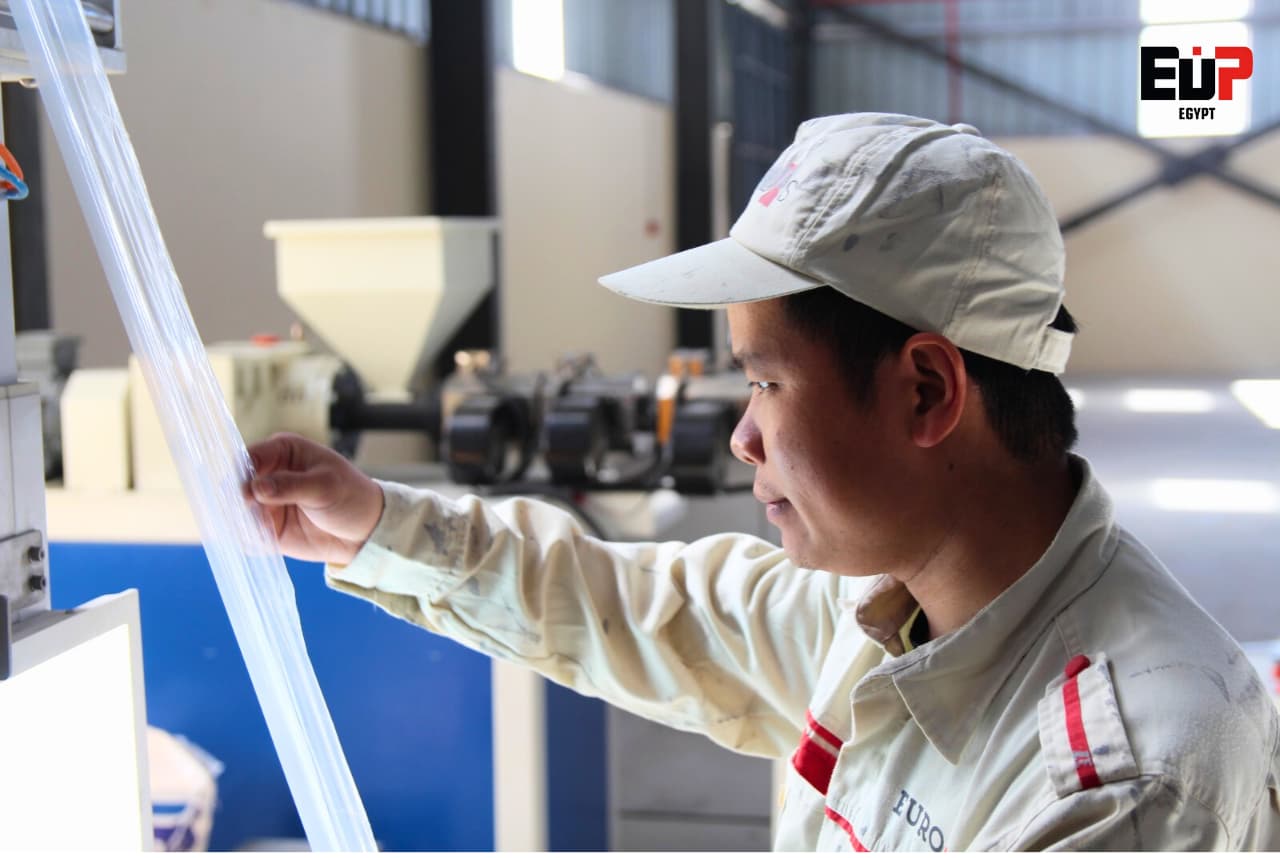
After the masterbatch has been cooled, pelletized, and stabilized, the final stage of the quality control process involves validating all technical parameters before packaging and shipment. This stage is not merely procedural; it confirms that the entire quality control chain has functioned correctly and that the batch meets defined performance criteria.
First, the Melt Flow Index (MFI) of the finished masterbatch is re-tested according to ASTM D1238. MFI reflects the material’s flow characteristics and can indicate whether thermal degradation occurred during extrusion. If the measured MFI deviates beyond internal control limits (for example ±5% from the target value), the batch may be held for further evaluation. This precaution prevents downstream issues such as altered injection pressure, extended cycle times, or dimensional instability when customers incorporate the masterbatch into their base resin.
For color masterbatch, ΔE measurement using a spectrophotometer is mandatory. The measurement follows the CIE Lab color space system and ISO 7724 standards. If ΔE exceeds the internal tolerance threshold, corrective action must be taken before release. This control is particularly critical for applications requiring strict brand color consistency or production across multiple facilities.
Beyond MFI and ΔE, many manufacturers also verify density according to ASTM D792, measure final moisture content, and conduct application simulation tests by compounding the masterbatch with a reference base resin. These additional checks ensure that laboratory results translate into stable real-world processing performance.
Each production batch is accompanied by a retention sample stored for a defined period to enable traceability in case of market feedback. This traceability mechanism forms a core element of a transparent and accountable masterbatch quality control system.
3. International Standards in Masterbatch Quality Control
A robust quality control framework must align with internationally recognized standards to ensure reliability and global acceptance.
3.1. ISO 9001 and Quality Management Systems
ISO 9001 is a globally recognized standard for Quality Management Systems (QMS). According to the International Organization for Standardization (ISO), the standard requires companies to establish documented processes, control records, and implement continuous improvement practices.
In masterbatch production, ISO 9001 ensures that each stage of quality control is documented, monitored, and auditable. This structured approach reduces dependence on individual expertise and strengthens process consistency.
3.2. ASTM and ISO Testing Standards
Technical validation in masterbatch production frequently relies on ASTM and ISO standards. For example:
- ASTM D1238 for Melt Flow Index testing
- ASTM D792 for density measurement
- ISO 7724 for color measurement
By adhering to standardized test methods, manufacturers ensure that data remains objective, reproducible, and internationally comparable.
4. Technology Integration in Masterbatch Quality Control
Modern quality control increasingly integrates automation and data-driven monitoring systems.
4.1. Real-Time Process Monitoring
In advanced extrusion lines, barrel temperatures, screw speed, and pressure are continuously recorded. If parameters exceed predefined control limits—such as a temperature deviation of more than 3–5°C—the system triggers alerts for corrective action. This real-time oversight minimizes batch-to-batch variation and prevents large-scale deviations.
4.2. Statistical Process Control (SPC)
Statistical Process Control (SPC) methods are often applied to monitor trends in MFI or ΔE. If data begins to drift toward control boundaries, adjustments can be implemented proactively. This approach reduces the likelihood of non-conforming batches and supports stable long-term production.
4.3. Batch Traceability Systems
Each masterbatch batch is assigned a traceability code containing production date, extrusion line identification, formulation reference, and raw material records. When customer feedback arises, traceability allows for targeted investigation rather than system-wide re-evaluation.
5. Summary of the Masterbatch Quality Control Process
The masterbatch quality control process can be summarized into five interconnected stages: raw material inspection, formulation and dosing control, extrusion monitoring, intermediate inspection, and final product validation.
| Stage |
Key Controls |
Objective |
| Raw Materials |
MFI, moisture, particle distribution |
Eliminate input risk |
| Formulation |
Accurate dosing, ratio control |
Ensure consistency |
| Extrusion |
Temperature, pressure, screw speed |
Achieve uniform dispersion |
| Intermediate |
MFI, dispersion test |
Early deviation detection |
| Final Product |
ΔE, MFI, retention sample |
Confirm batch compliance |
This structured sequence demonstrates how quality control is embedded throughout production rather than concentrated at a single checkpoint.
6. Frequently Asked Questions About Masterbatch Quality Control
6.1. What MFI deviation is considered acceptable?
Acceptable deviation depends on application requirements. In many industrial settings, ±5% of the target MFI value serves as an internal control limit. However, high-precision technical applications may require tighter tolerances.
6.2. What ΔE level is visually imperceptible?
Under standard D65 lighting conditions, ΔE ≤ 1.0 is generally considered visually indistinguishable. Actual acceptance criteria depend on customer specifications.
6.3. Why is intermediate inspection necessary?
Intermediate inspection helps identify deviations before the entire pellet batch is completed. Detecting issues early significantly reduces material waste and corrective costs.
7. About EUROPLAS
EUROPLAS is a masterbatch manufacturer with over 17 years of experience in the plastics industry. The company owns a system of 7 modern factories and exports products to more than 95 countries worldwide, with a total export volume of 0.9 million tons per year. The product portfolio includes filler masterbatch, color masterbatch, plastic additives, engineering plastic compounds, bioplastics, and bio fillers serving a wide range of applications from packaging and injection molding to engineering plastics. EUROPLAS' quality control system is built to international standards, with a multi-layered monitoring process to ensure consistency between production batches.
EUROPLAS's flagship products include:
If you are looking for a masterbatch supplier with a clear, transparent, and consistent quality control process across batches, please contact our technical team for advice on the right solution for your application.